
Strouds Barn
The building is a modest mid-18th C barn in three bays with centrally placed mid-strey and threshing floor, and is built on an east-west axis to benefit from the prevailing winds to enable threshing and winnowing grain. A long east facing aisle has been added, a common device to increase storage capacity. An additional northerly bay of brick and flint, was added probably in the early 20th C.
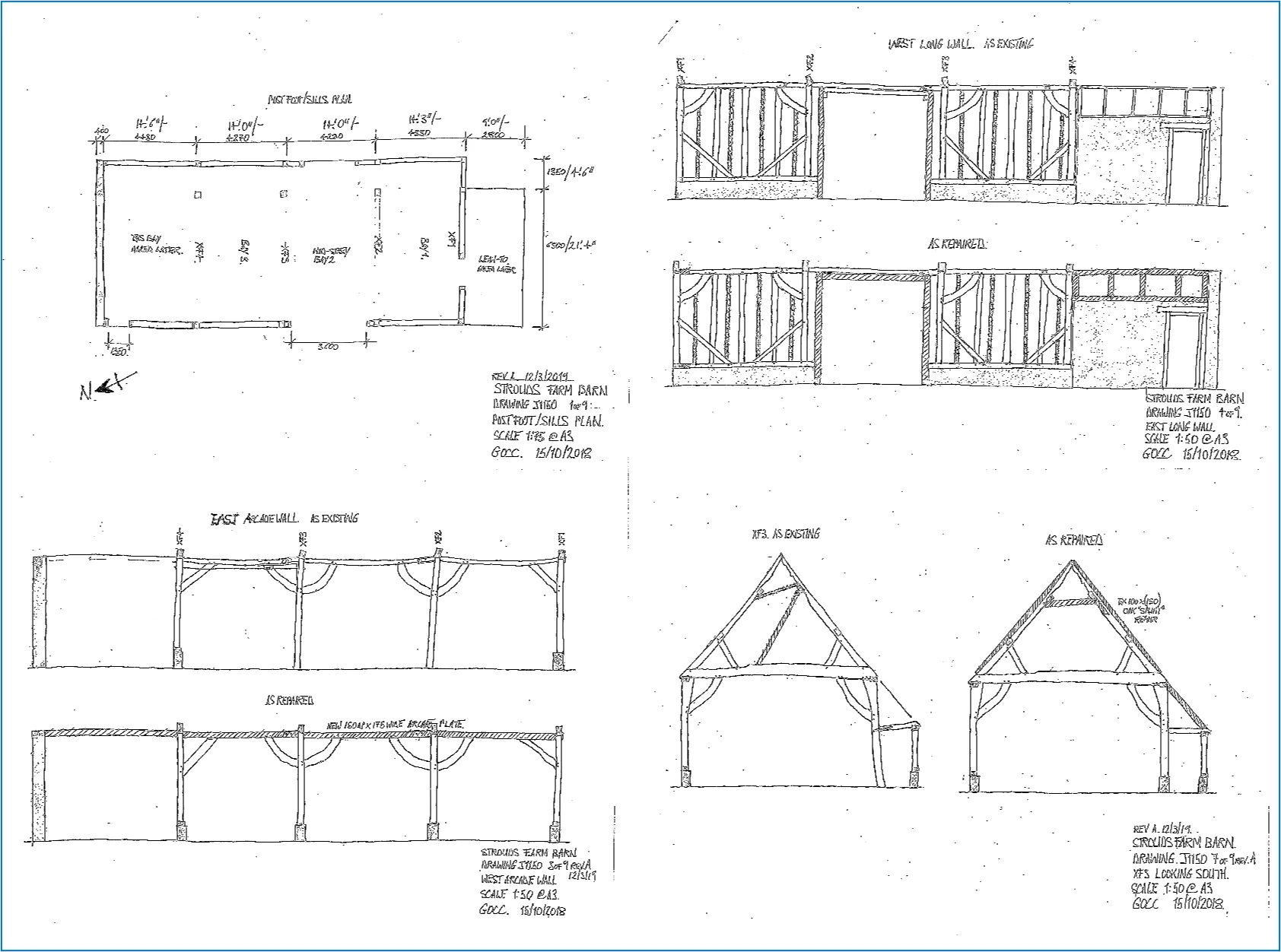
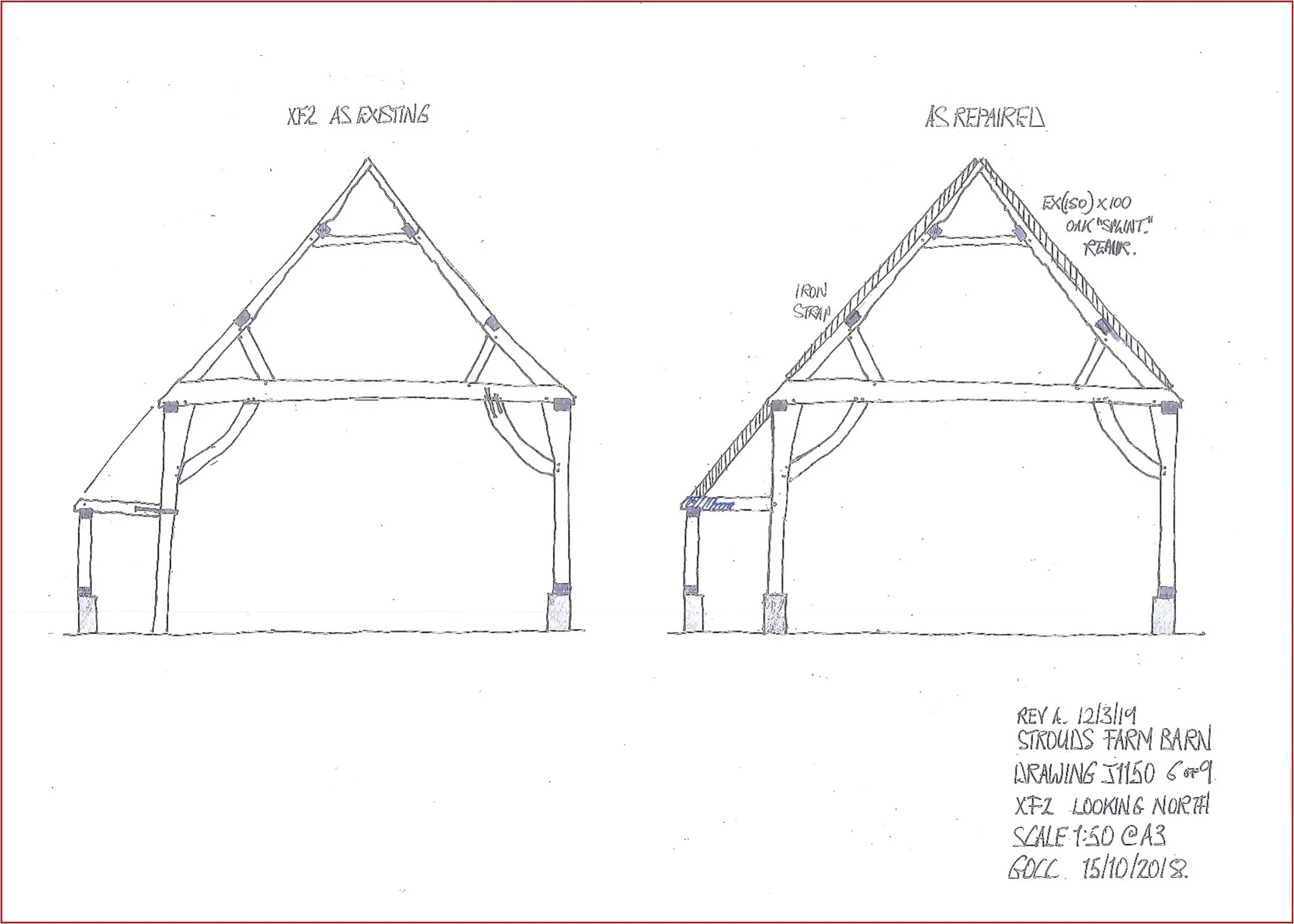
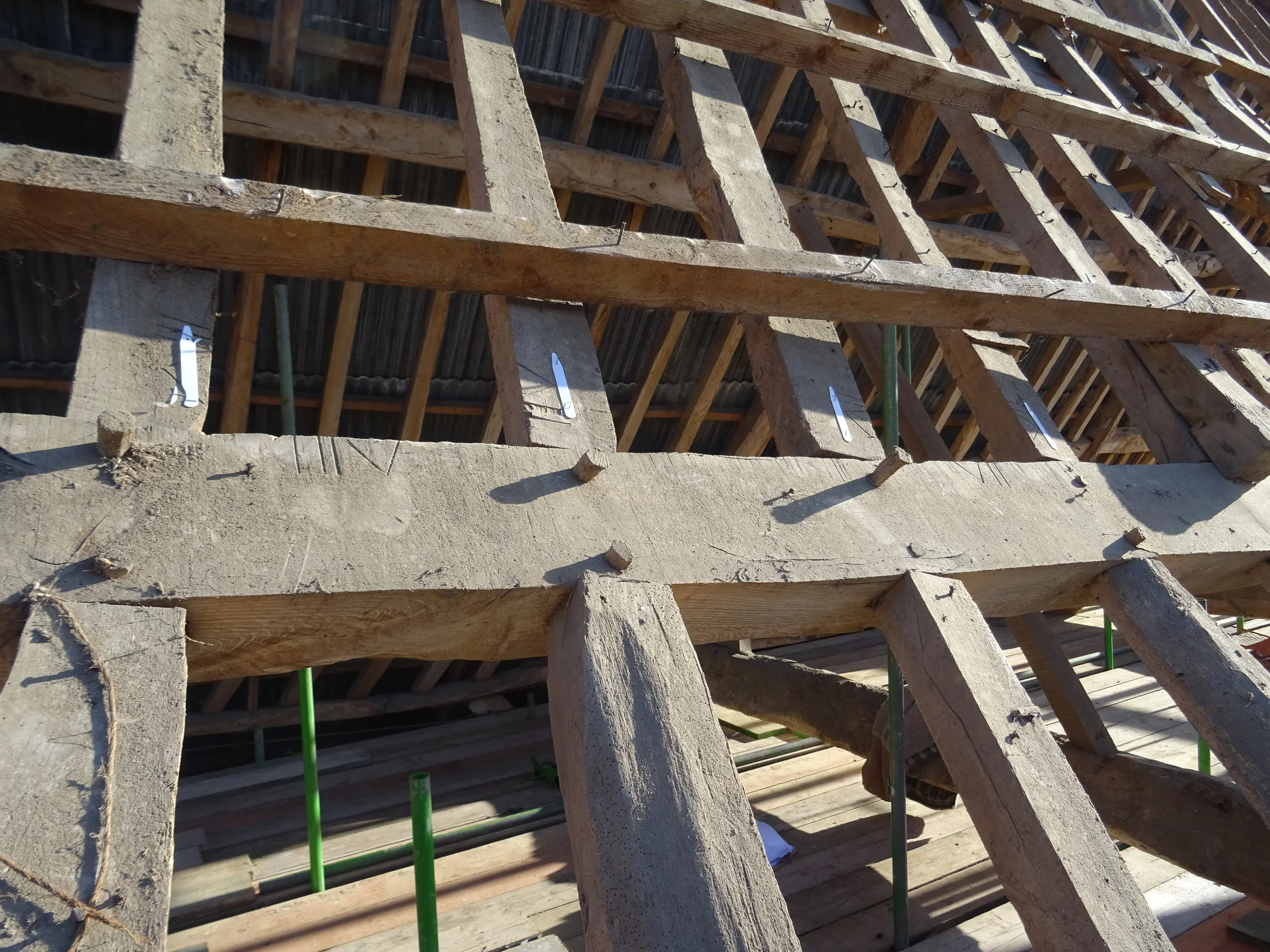
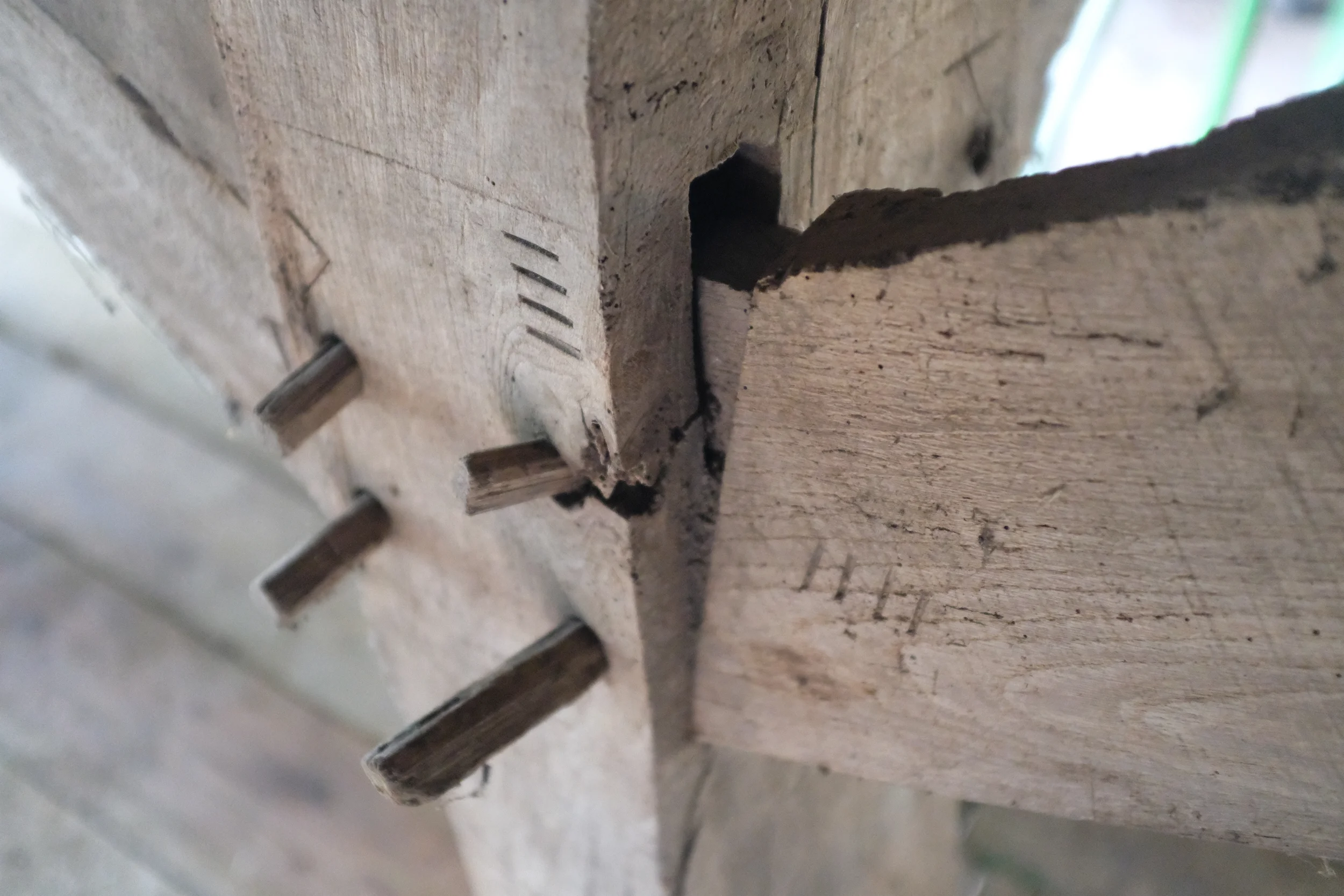
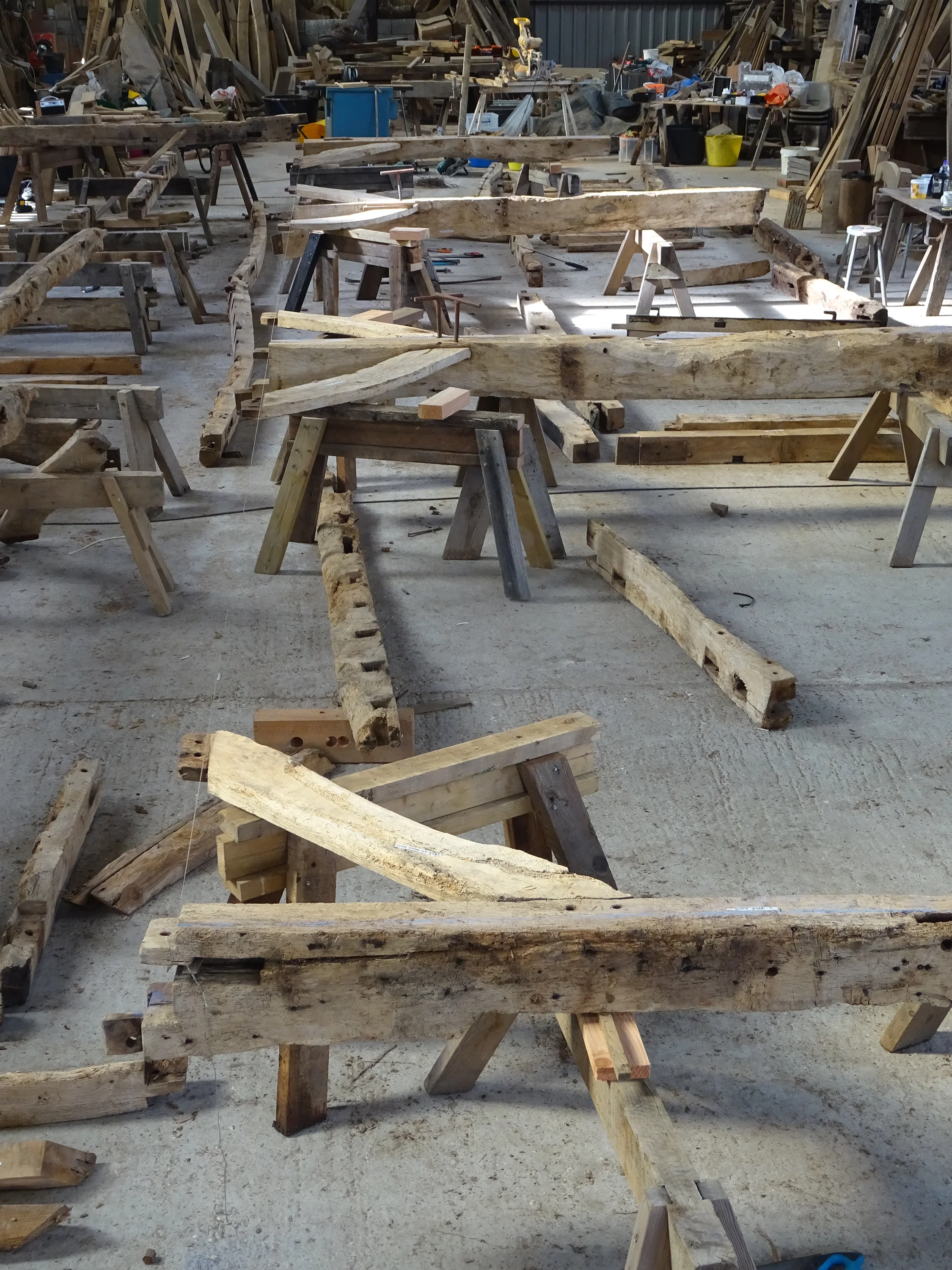
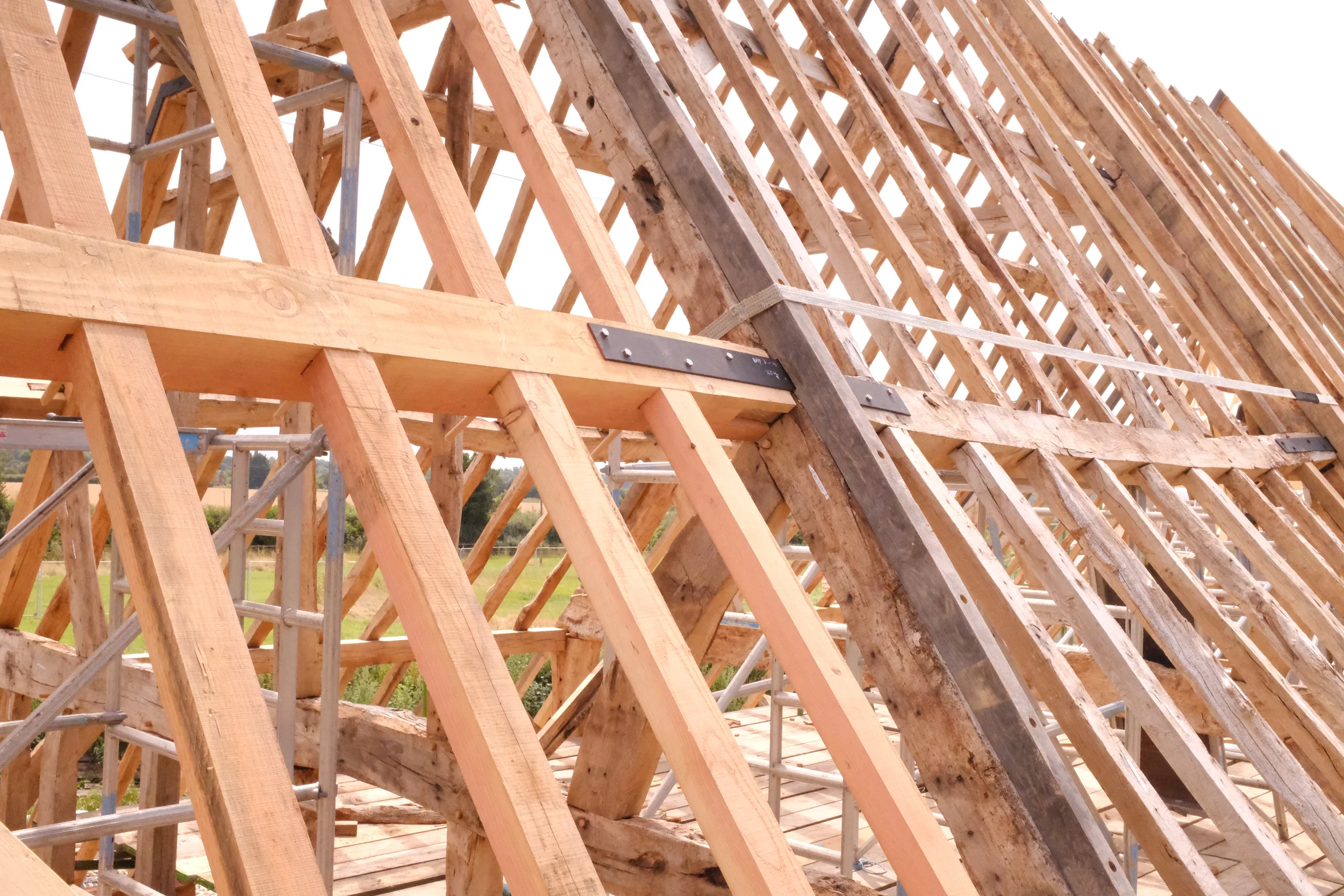
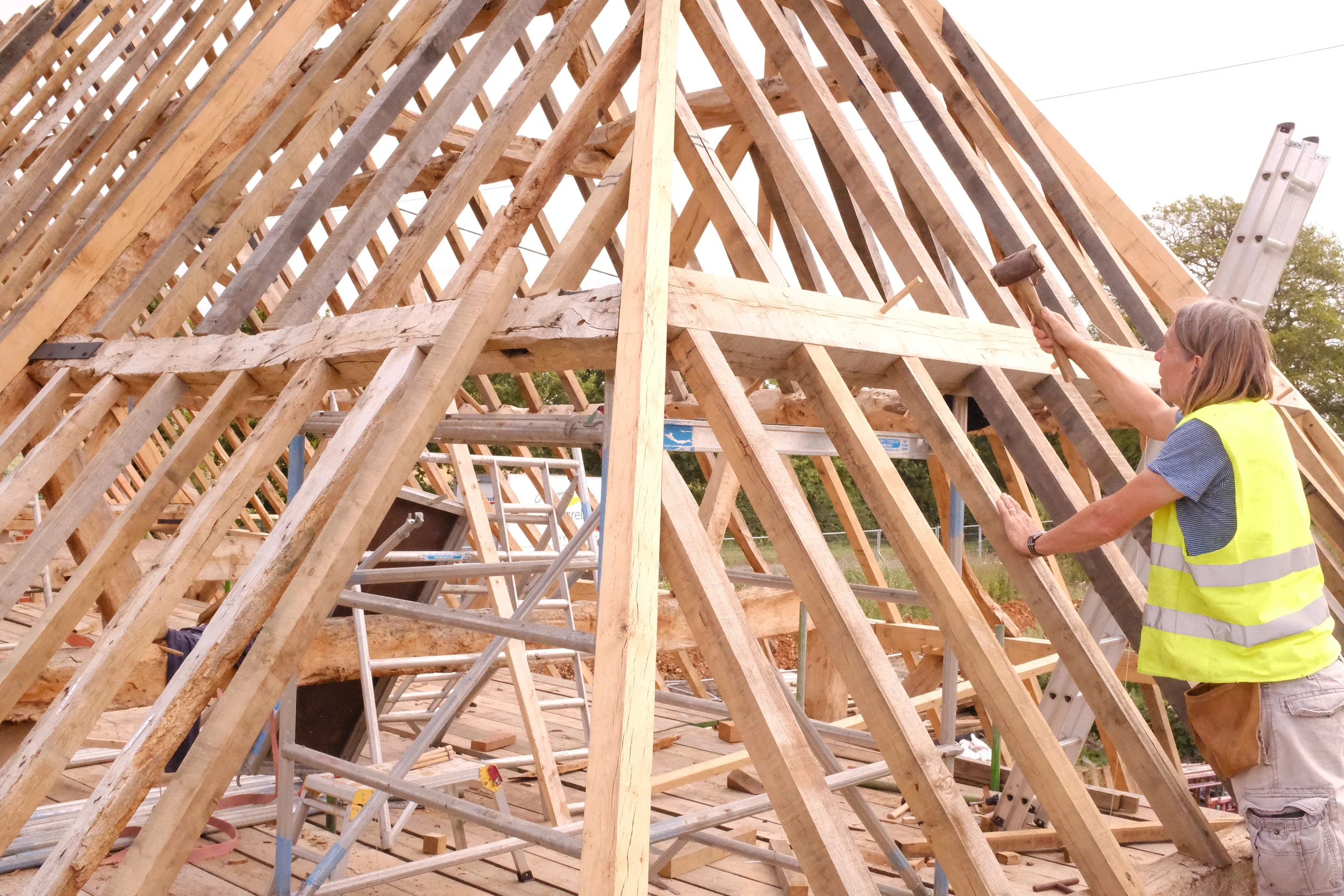
The client wanted to move the barn away from a busy main road, and as the building was not listed, we did not need to convince the conservation officer of the merits of this approach. After 40 years specialising in the repair of historic structures, we have learnt to recognise when a building can be repaired ‘on the bench’ at less cost than on site. This was one of those buildings. Substantial structural movement had caused a lot of damage to the joints and the roof was severely racked. We prepared a full set of drawings of all frames ‘as existing’ and ‘as built’, carefully annotated the drawings and labelled each frame member accordingly before dismantling.
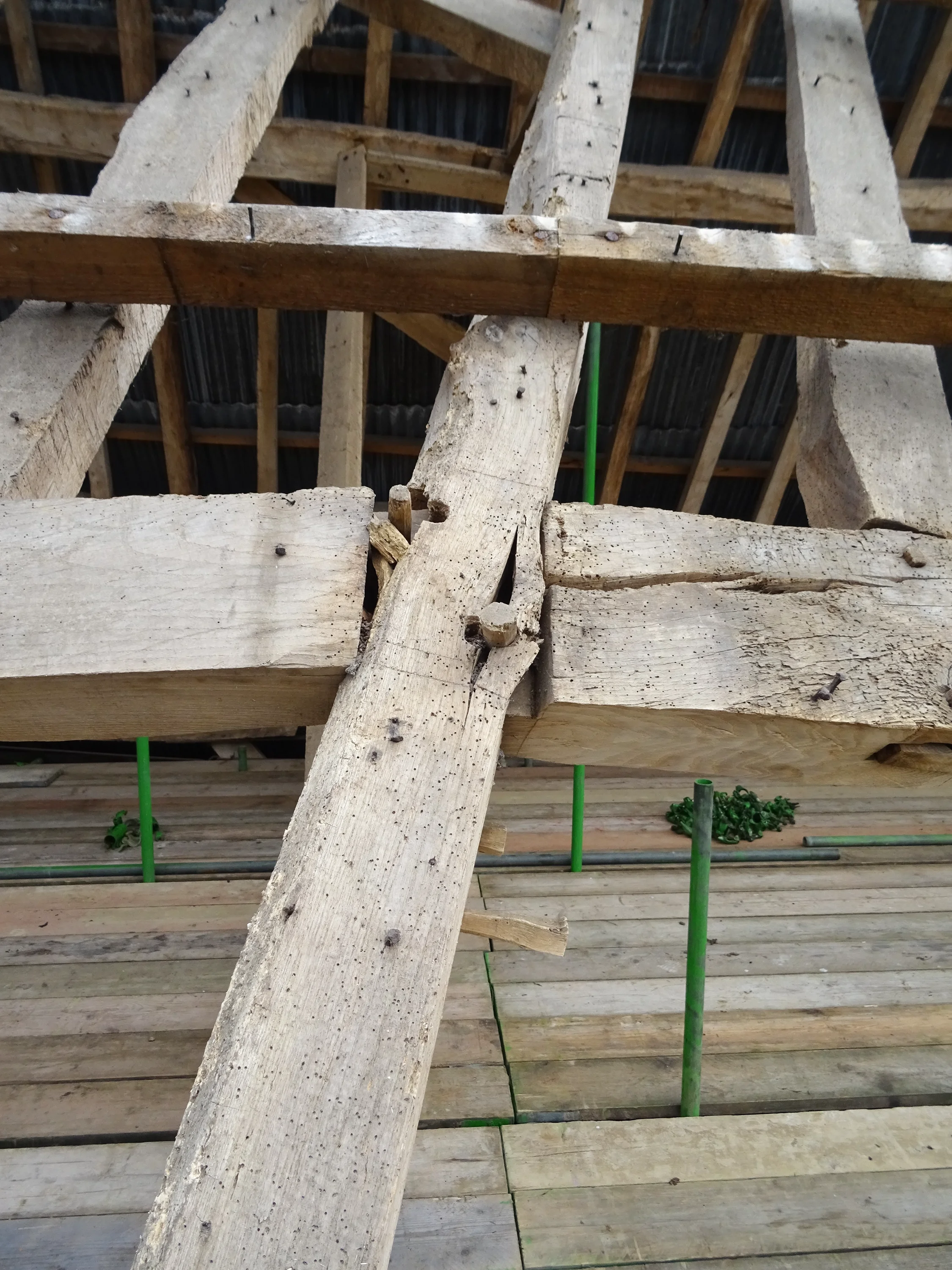
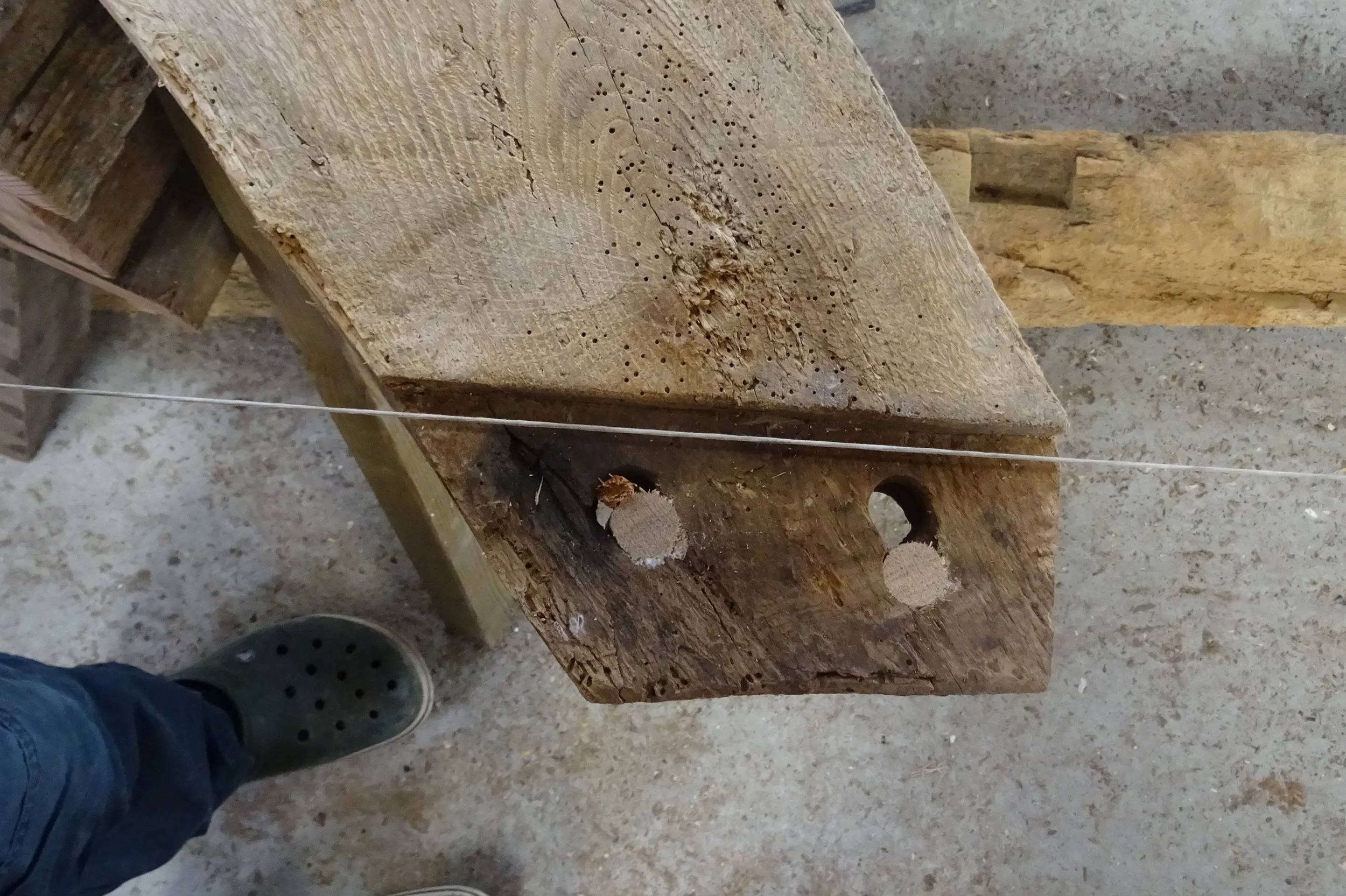
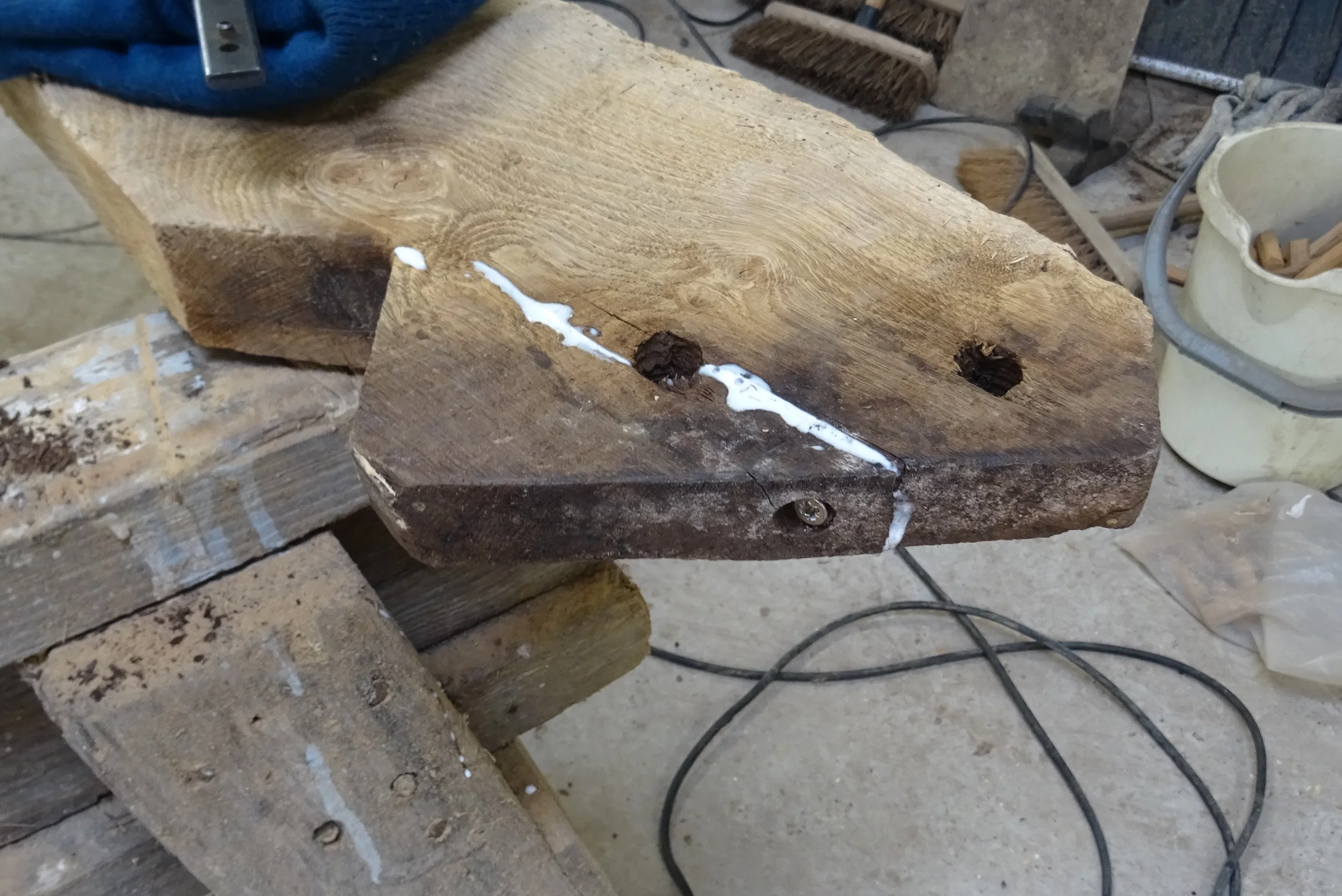
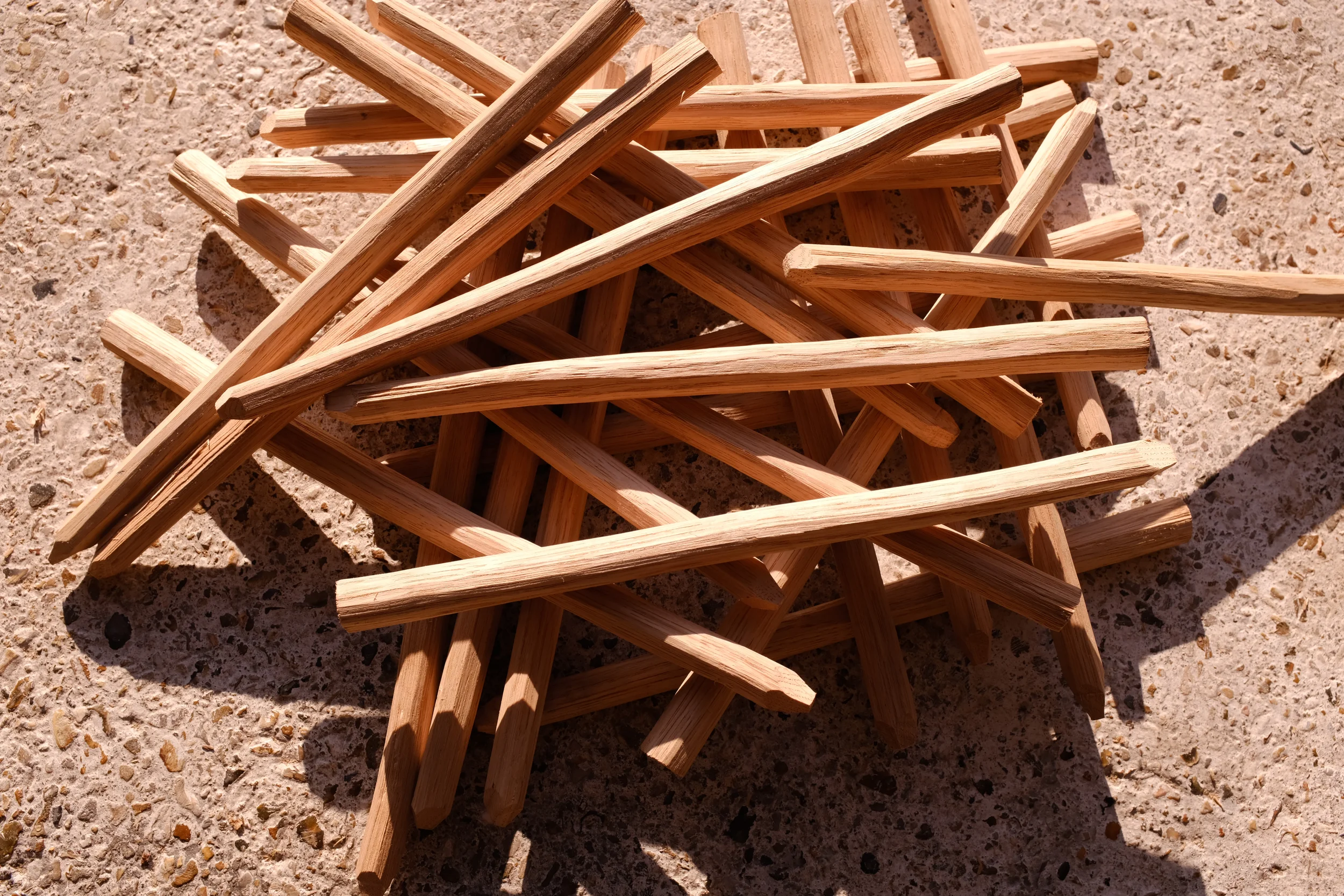
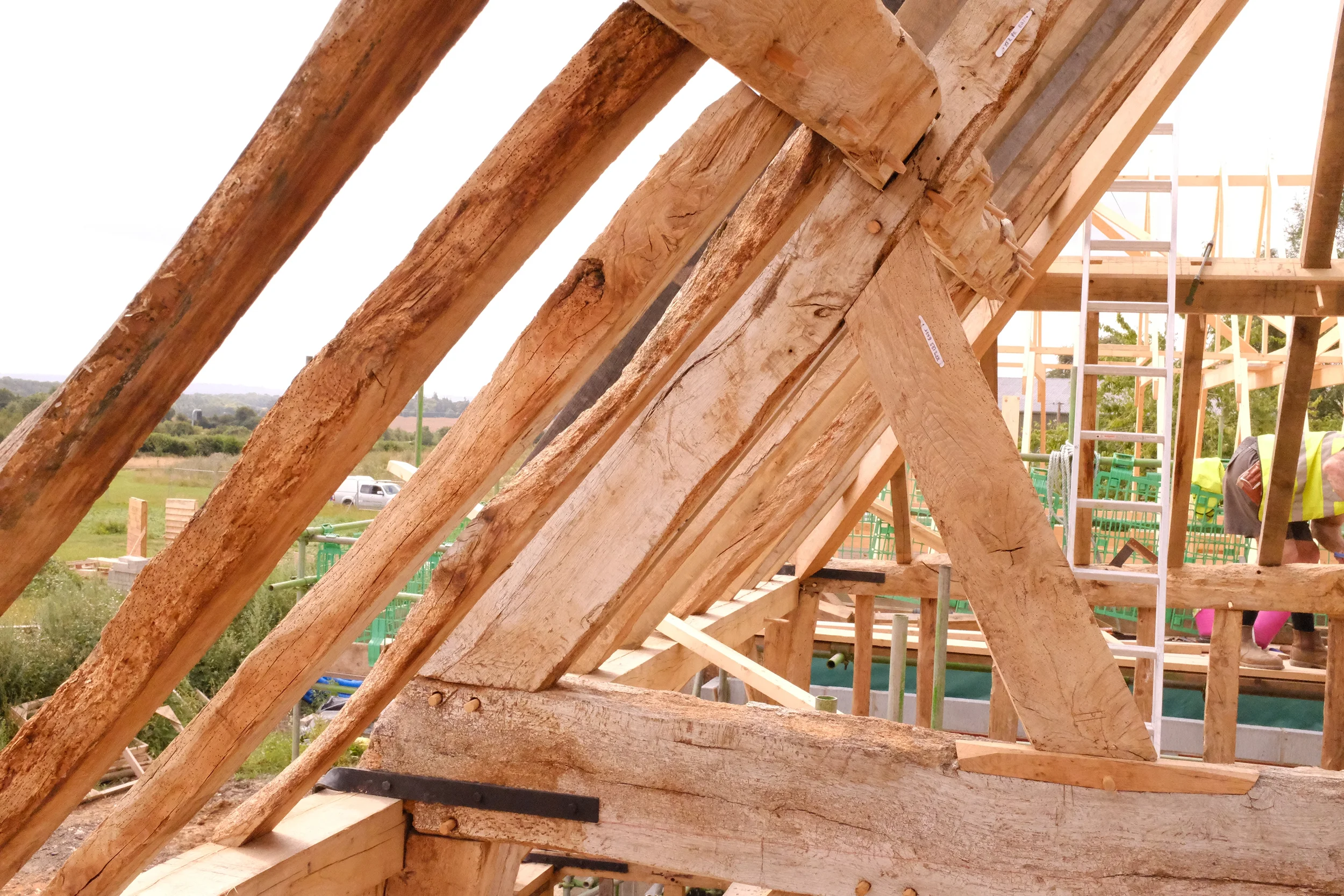
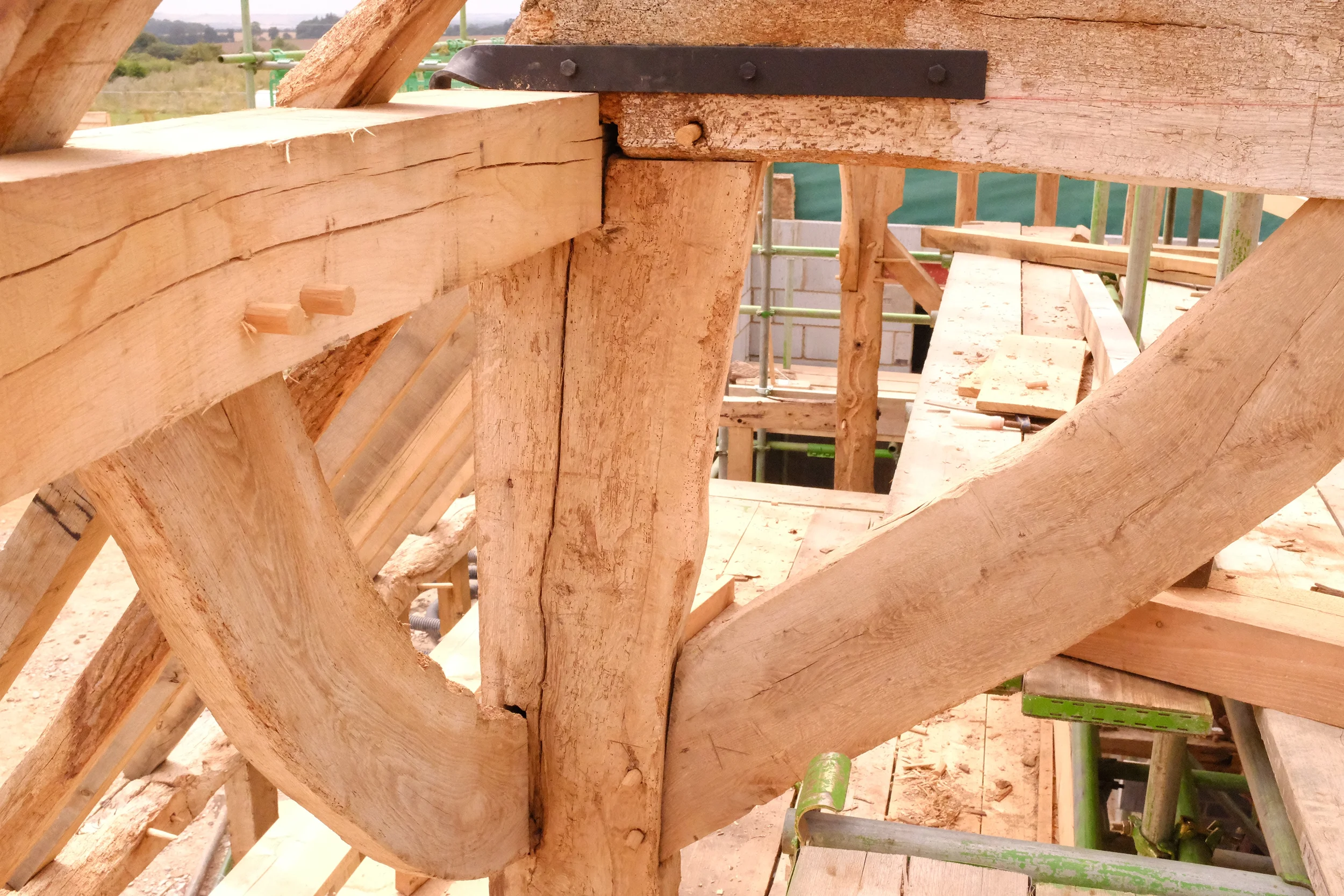
The frame was then transported to our workshops and worked on frame by frame, repairing all the broken and split tenons and damaged mortices, which is impossible with in-situ repairs. Another merit of this approach is that all the cleft and drawn framing pegs can be replaced, reinstating much of the strength of the original structure.
We framed the additional bay entirely in D. Fir to differentiate it from the original three bays of oak framed construction. The works were completed in 2019 and the barn now stands again ready for another three hundred years.
CLIENT
The Rooksnest Estate Ltd
ARCHITECT
ATP Architecture. Chris Trickey
ENGINEER
Nigel Challis – Andrew Waring Associates
BUILDER
Acorn Builders Pewsey Ltd
TIMBER STRUCTURE SPECIALIST
The Green Oak Carpentry Company. John Russell
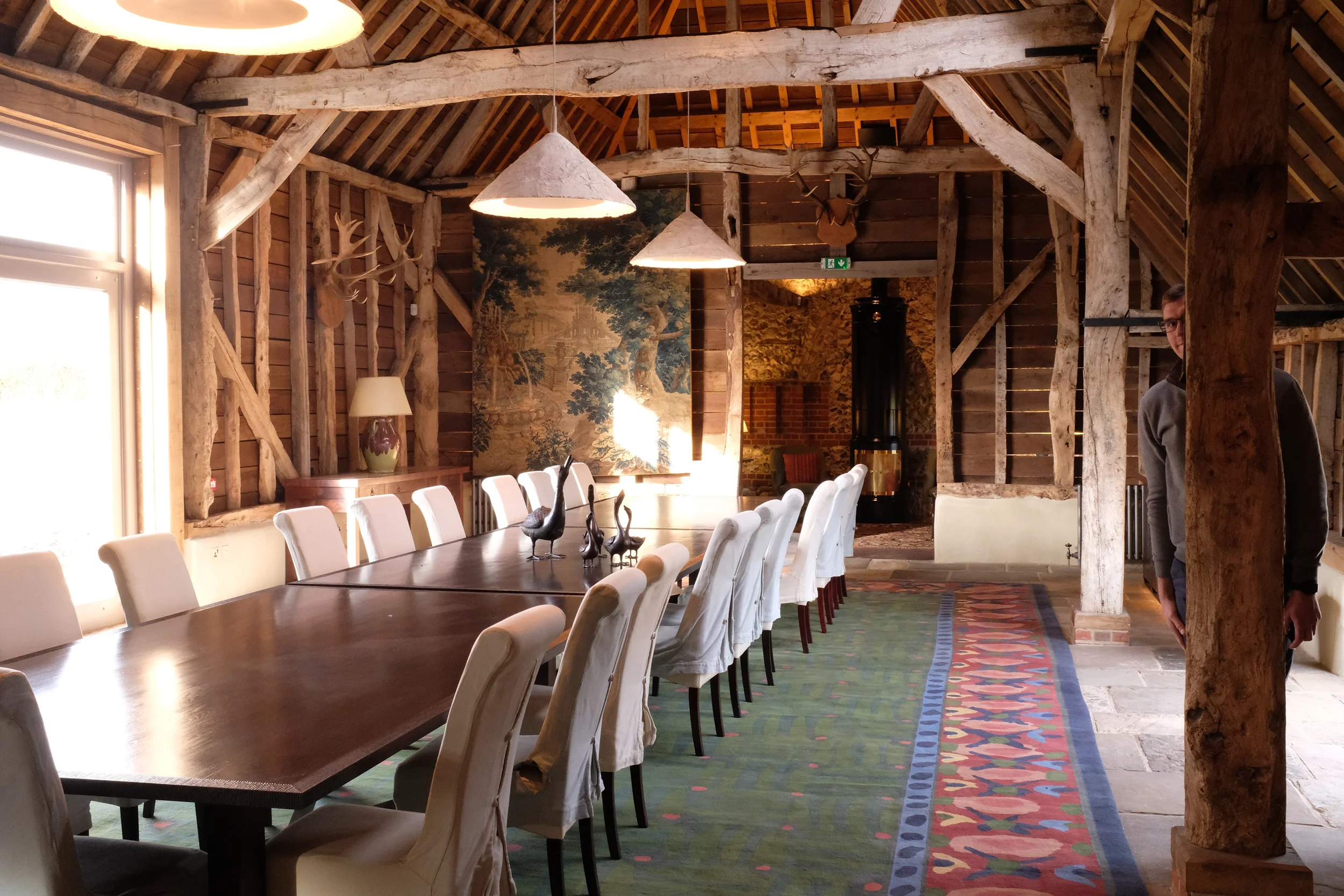
Barn conversions make beautiful spaces, especially when the internal volume is maintained, as is the case here.