
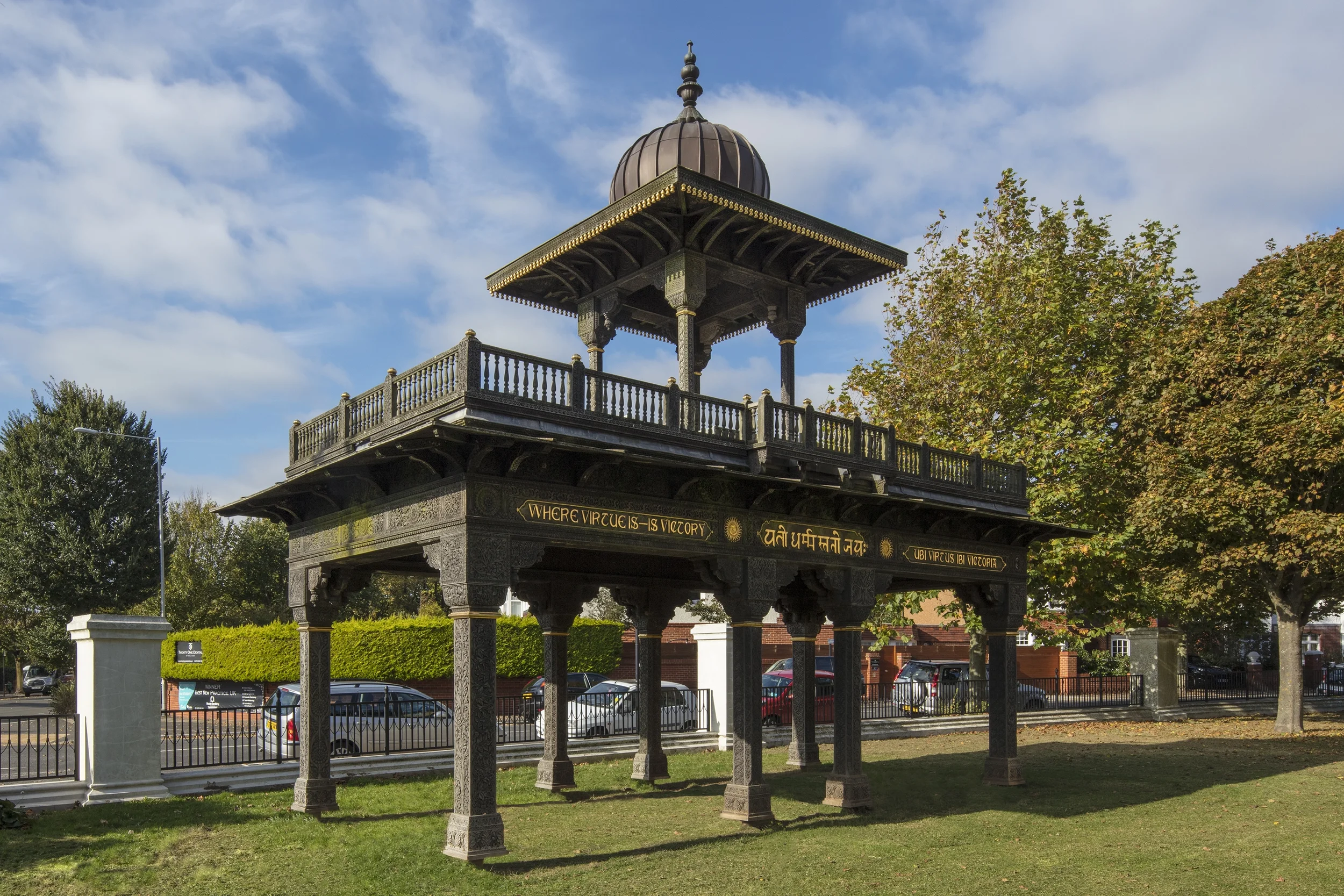
The Jaipur Gate
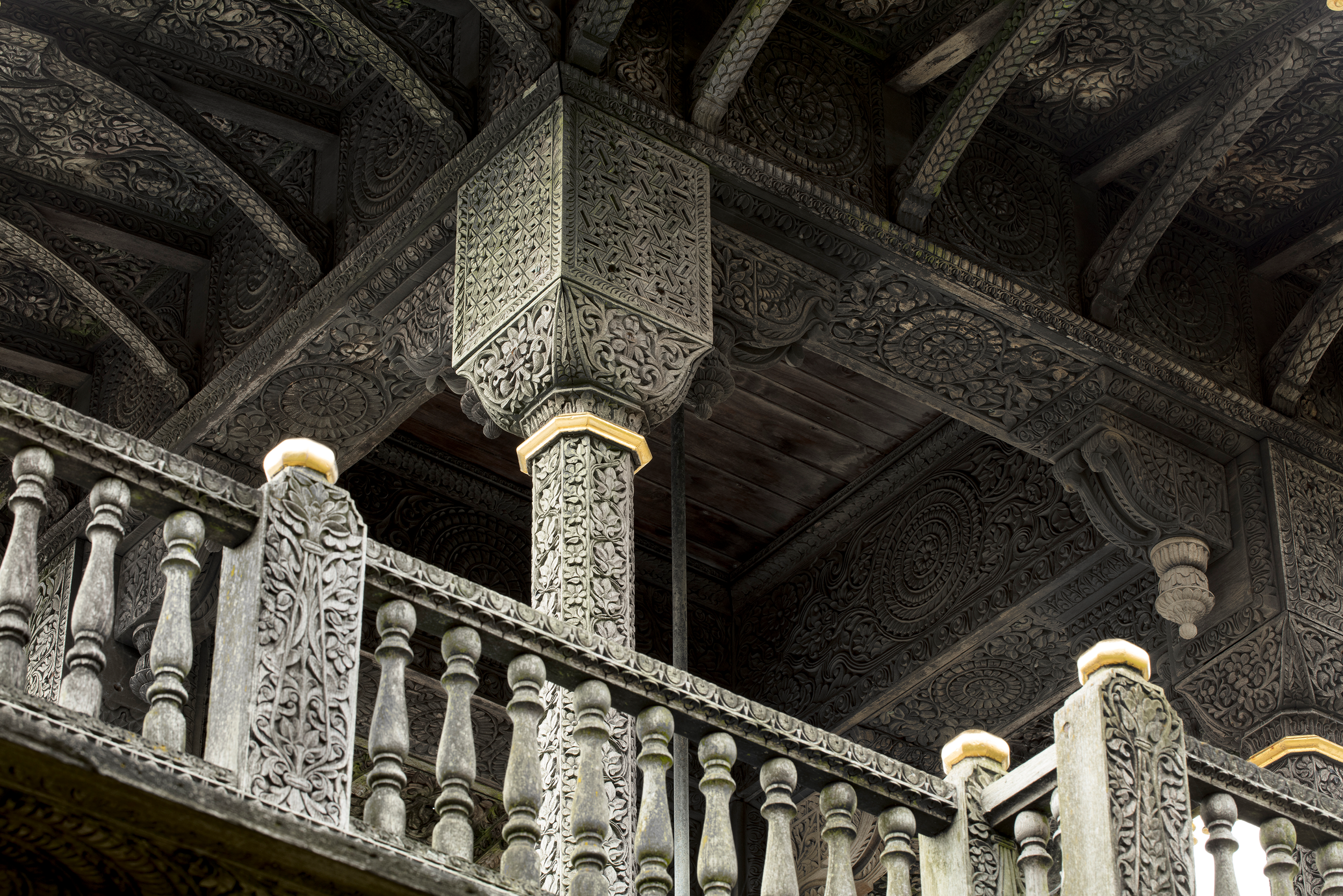
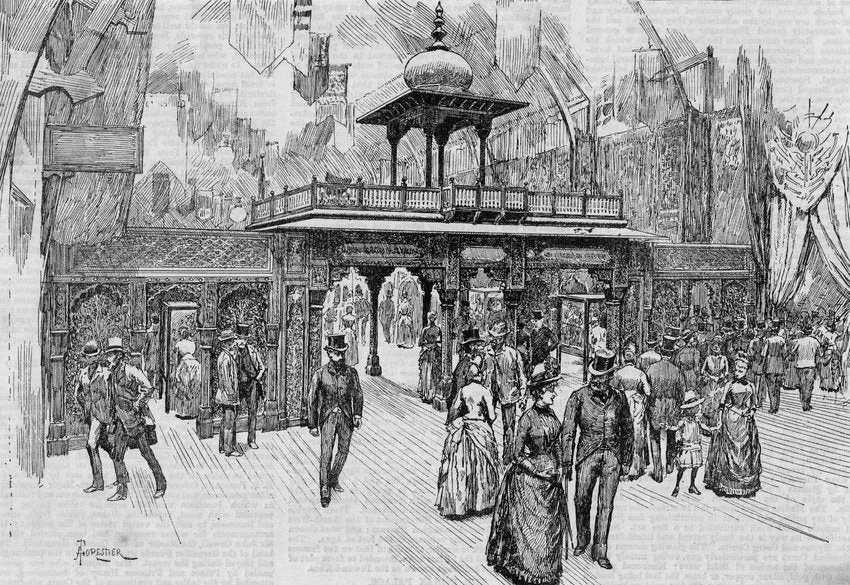
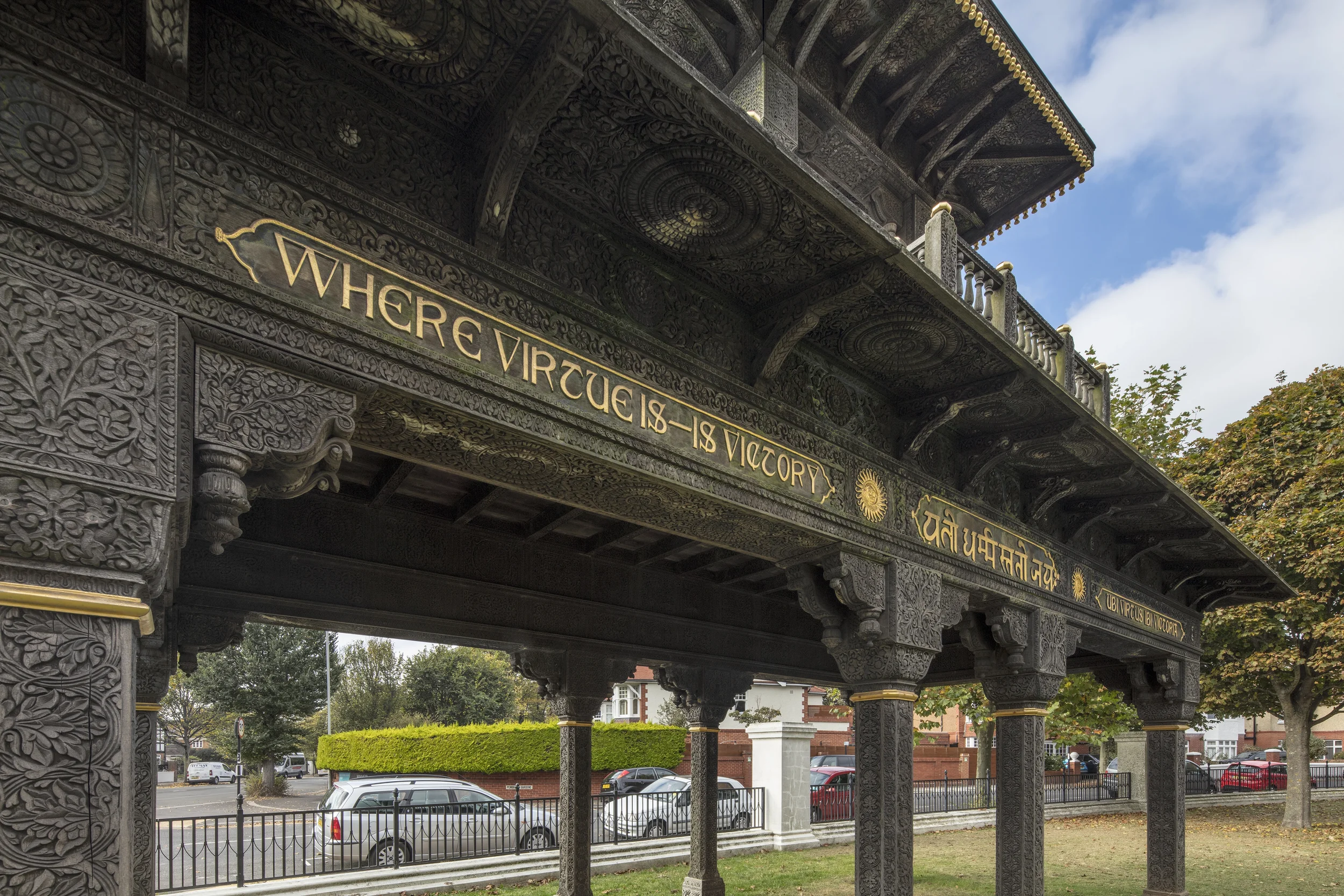
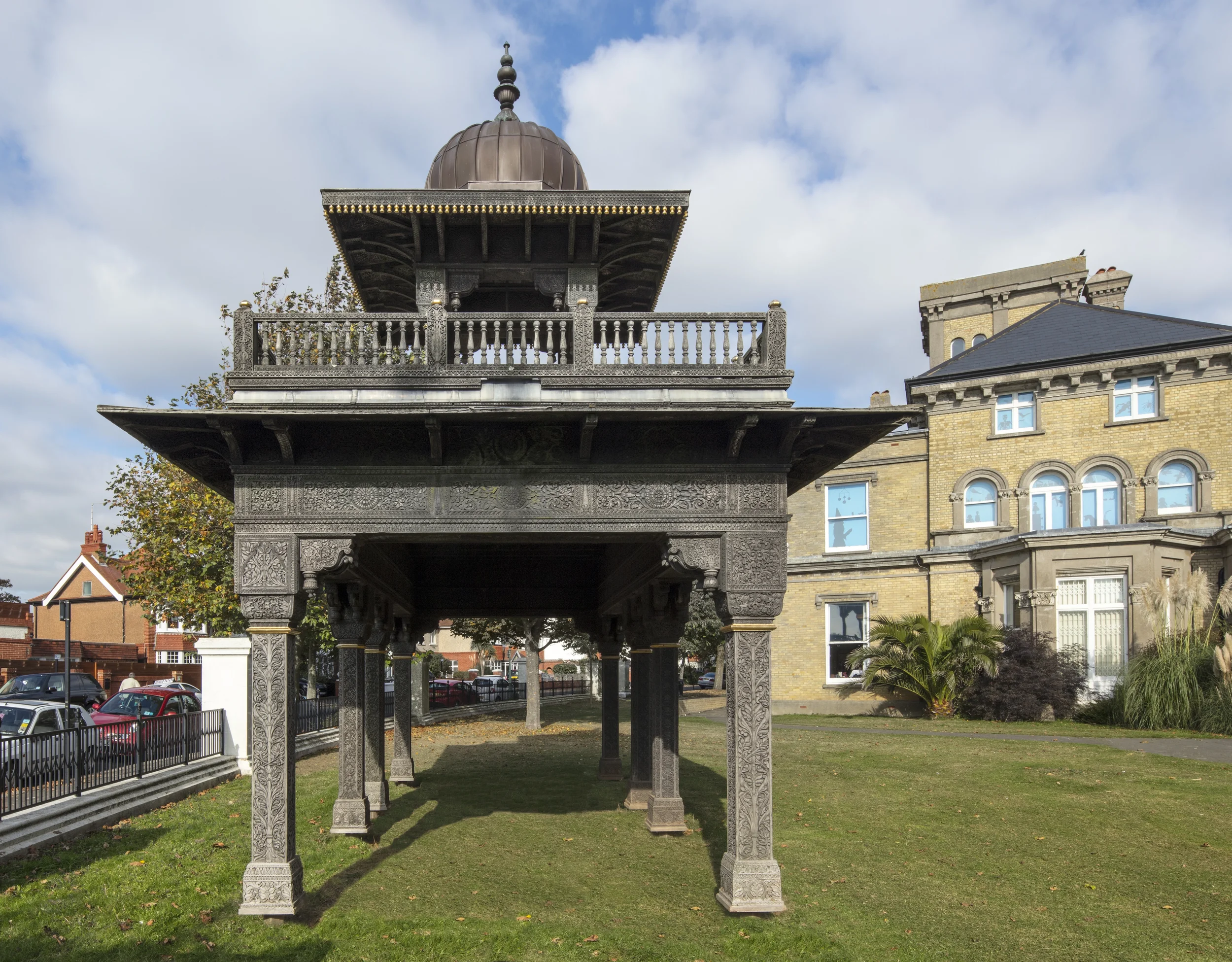
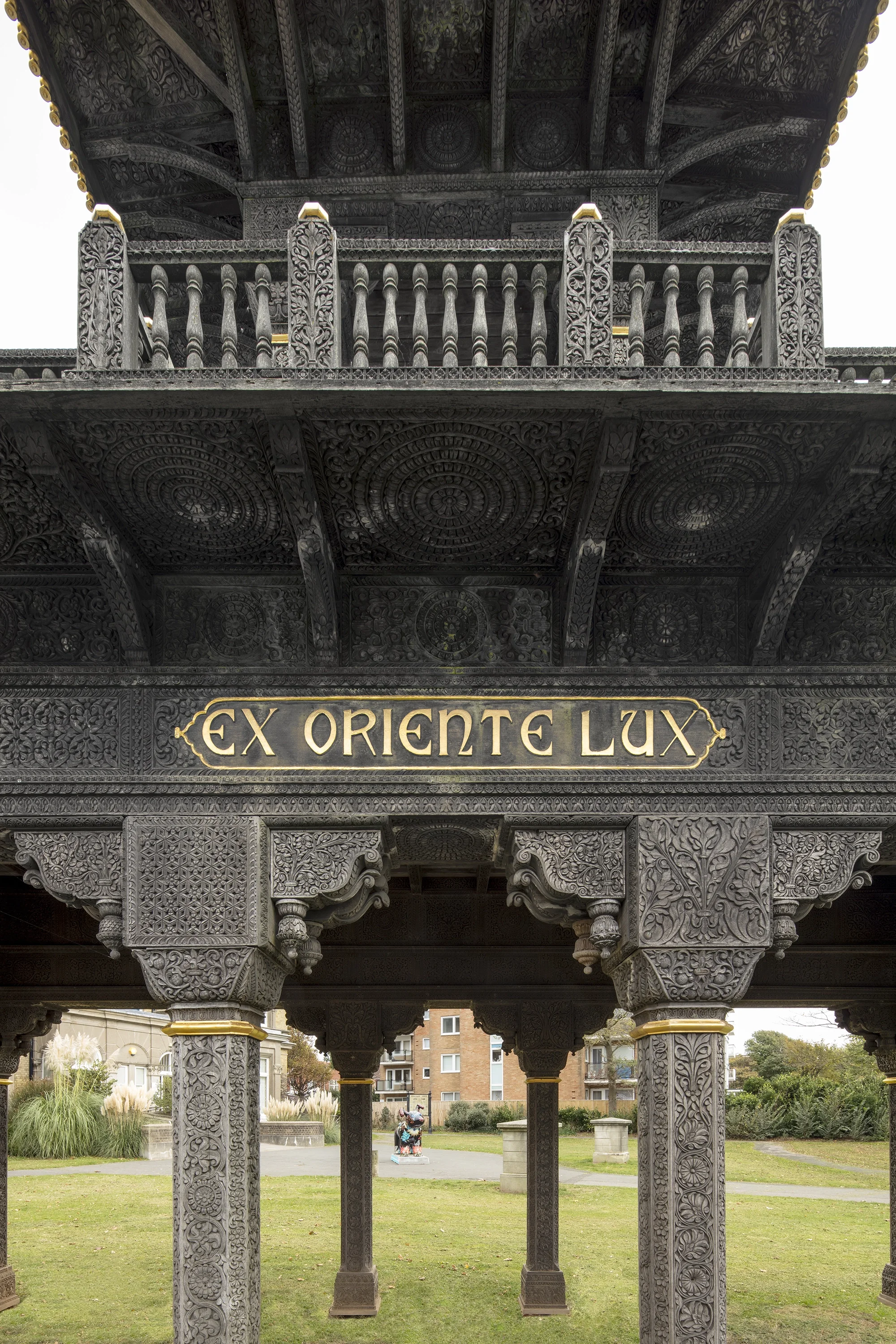
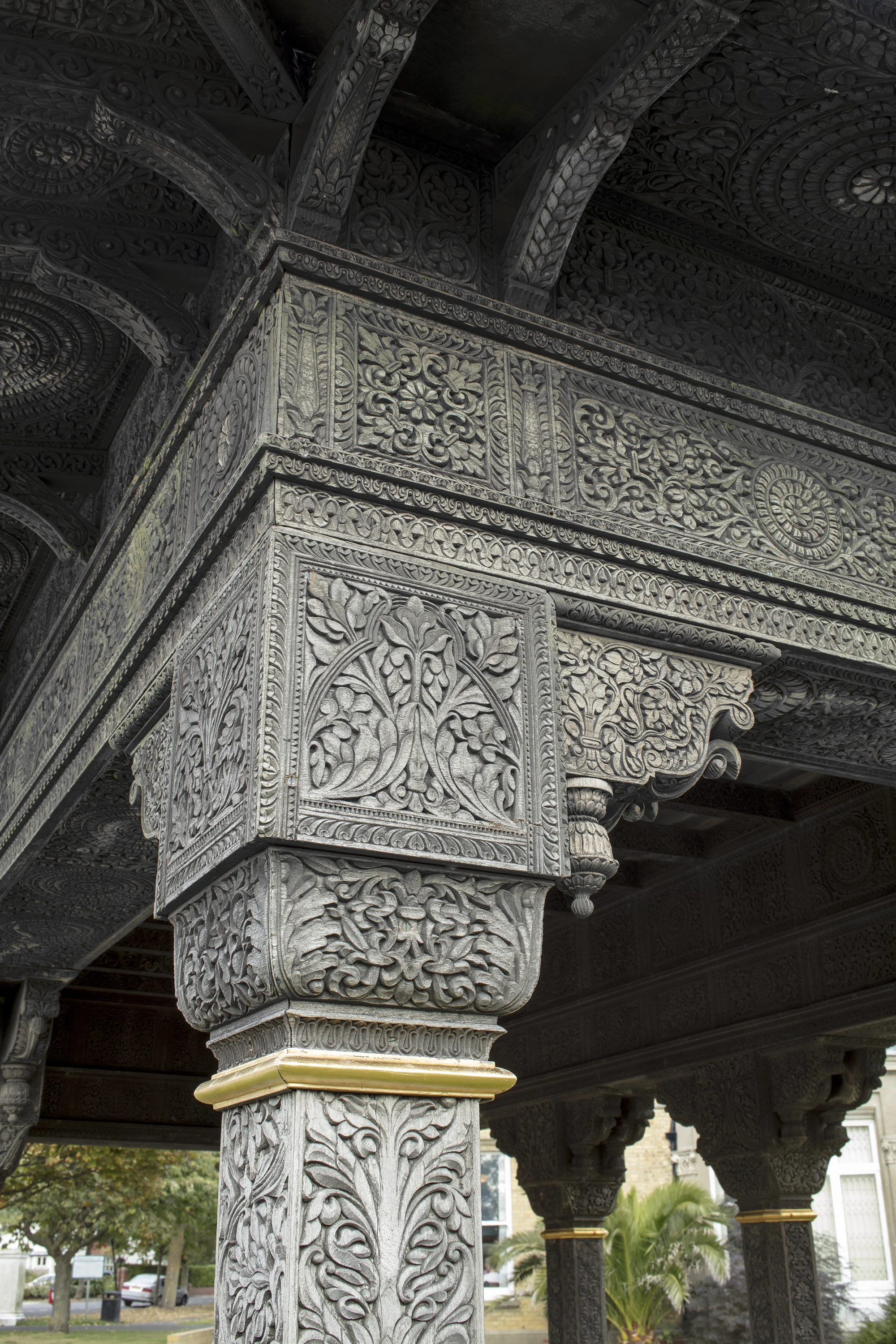
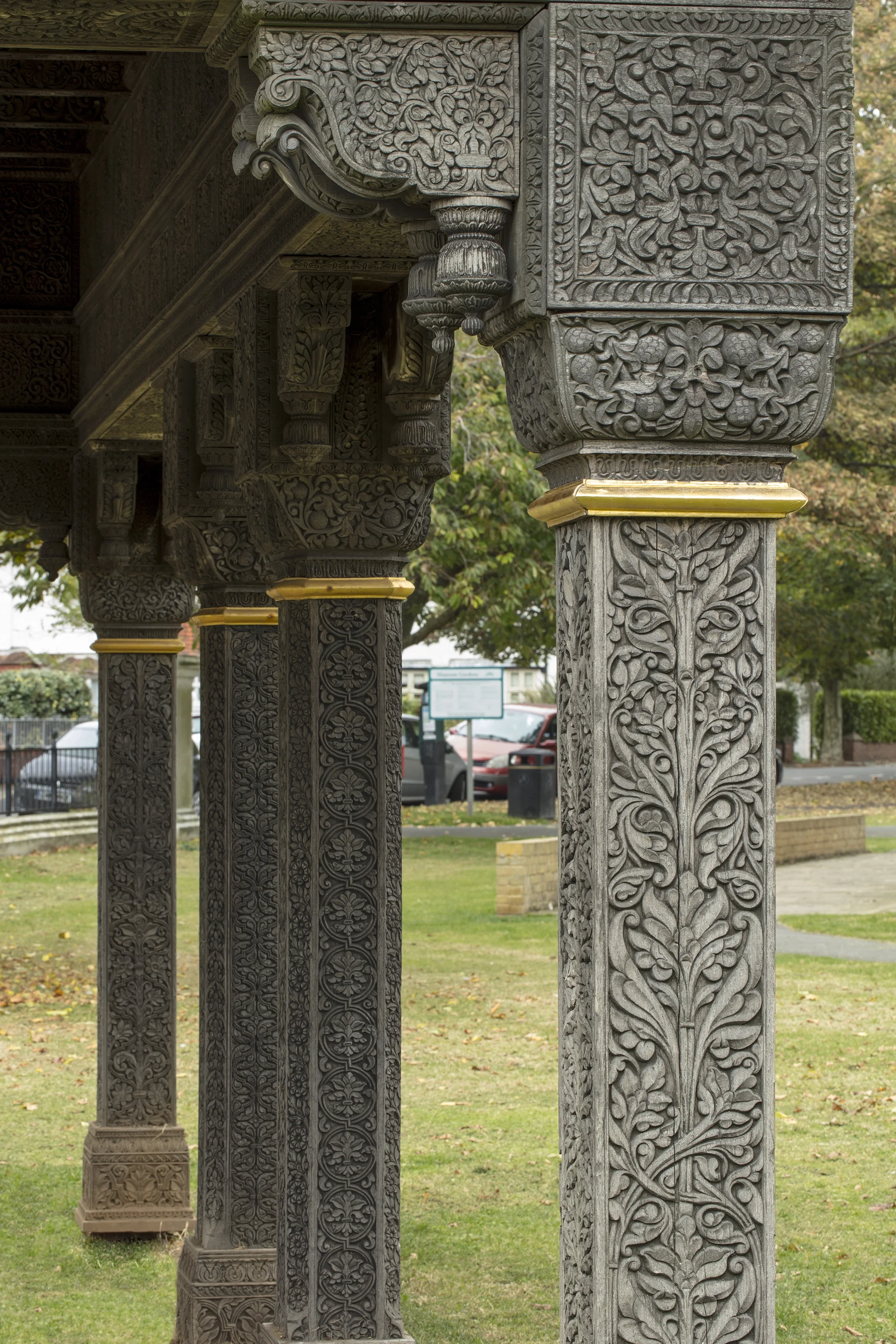
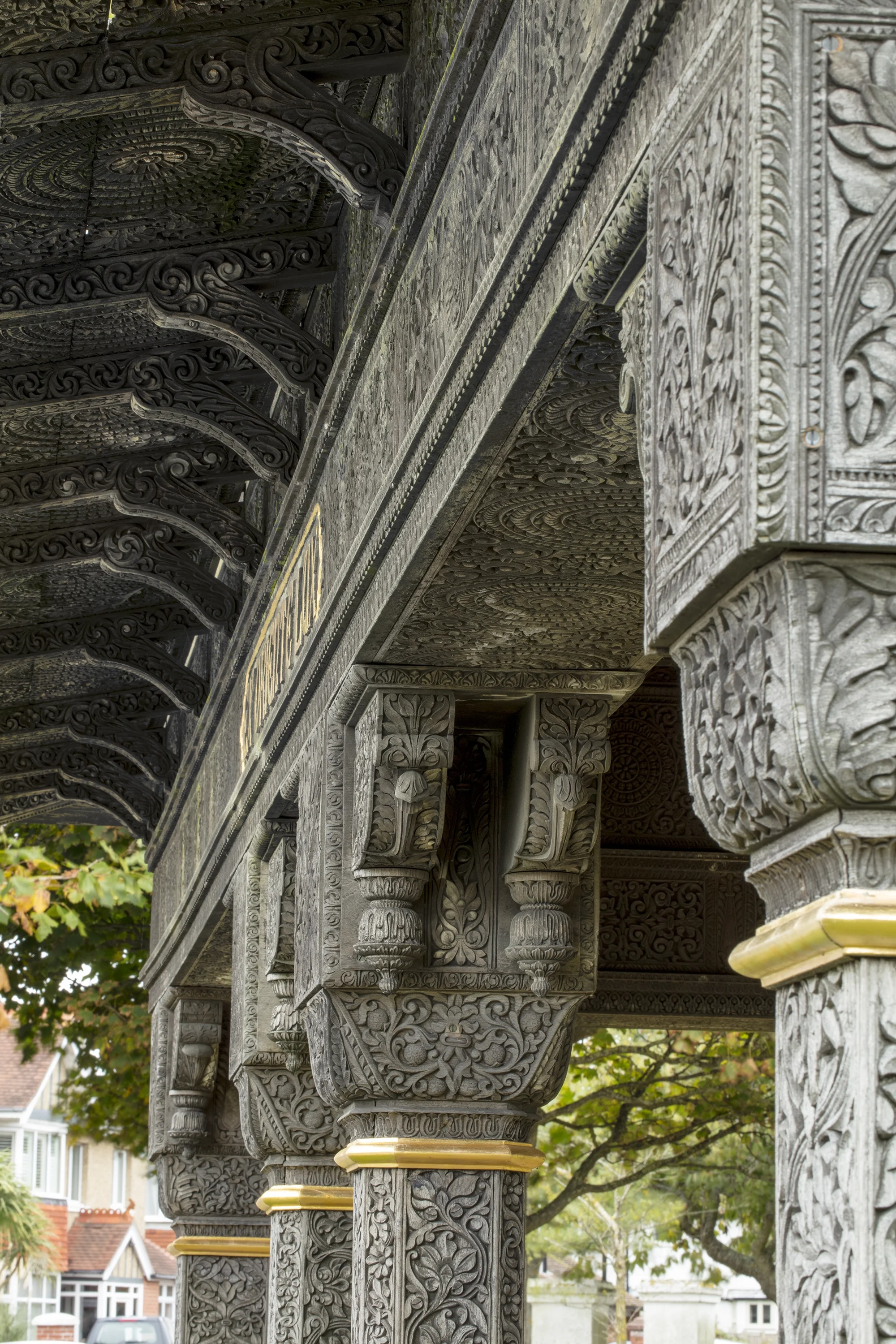
The Jaipur Gate was a gift to Queen Victoria from the Maharaja of Jaipur, on the occasion of the Indian and Commonwealth Exhibition of 1886. The structure was gifted to the Brighton and Hove Museum, by the Imperial Institute, when the museum opened in 1926. In the years that followed the structure stood in front of the main entrance to the museum. Although Teak (Tectona grandis) is a very durable timber, failure in the roof weathering led to water running down inside the structure and over many years, decayed the centre of the columns.
We were commissioned to take on the role of architect, engineer and specialist carpenter by an enlightened curator at the museum, who believed that the company was well placed to perform all these roles. We commenced work in 2005 and began by carefully recorded and dismantled the structure.
I cut my teeth as a conservation carpenter working for the Weald and Downland Open Air Museum, where all the buildings have been meticulously dismantled and moved to the museum, repaired and reassembled, and hence understood the rigorous processes required to undertake this task.
Over the next few months, the structure received a complete makeover. The rotten core of the columns was removed by cutting the square section columns diagonally, corner to corner, removing the decay and bonding the elaborately carved faces back onto a new teak core, using epoxy resin and stainless woodscrews. See illustration.
Whilst executing the repairs to the teak structure, we renewed all the lead work and flashings, found better ways to get the water off the building, and renewed the copper cupola and gold leaf lettering and other embellishments.
CLIENT
The Brighton and Hove Museum Trust
ARCHITECT AND ENGINEER
The Green Oak Carpentry Company
TIMBER STRUCTURE CONSERVATOR
The Green Oak Carpentry Company
Illustration of the Jaipuer Gate at the Indian and Commonwealth Exhibition of 1886