
Marley Wood Pool Barn
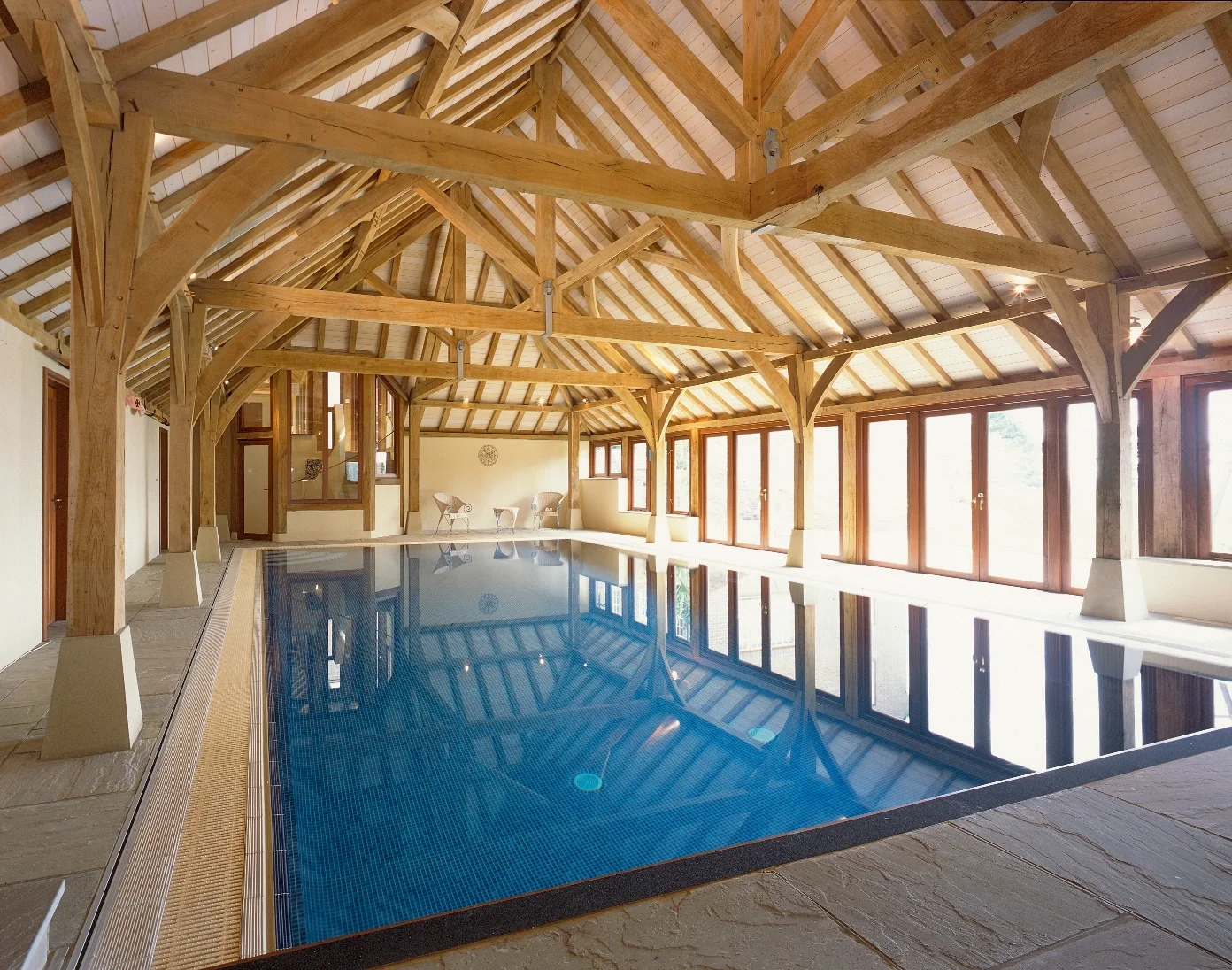
This pool barn utilises a common historical building form, the aisled barn for its layout. The arcade posts fall within the building envelope and are placed along the pool edge forming side aisles, giving access down both sides of the pool.
The specialist carpenters adopted the classic King post truss form, capable of achieving large spans (here in excess of nine metres) with ease. Note the use of a stainless steel ‘gib and cotter’ tensioning system, used to make a really strong connecting between the foot of the King post and the tie beam. Once the steel folding wedges have been driven into position, the whole tie beam is brought into positive camber, bringing the raking struts into compression and transferring load from the purlins via the struts, onto the haunches of the King post, where the forces are resolved, thus the tie beam acts primarily in tension rather than bending, a competent truss design. See below illustration of a gib and cotter tensioning system used in Lincoln Cathedral in the early 18thC.
This truss, and variants of it, has been in common use since the early 18th century and in some cases earlier. We have used this truss to achieve spans in excess of fifteen meters, where it becomes necessary to joint the tie beam at the mid-point below the King post foot.
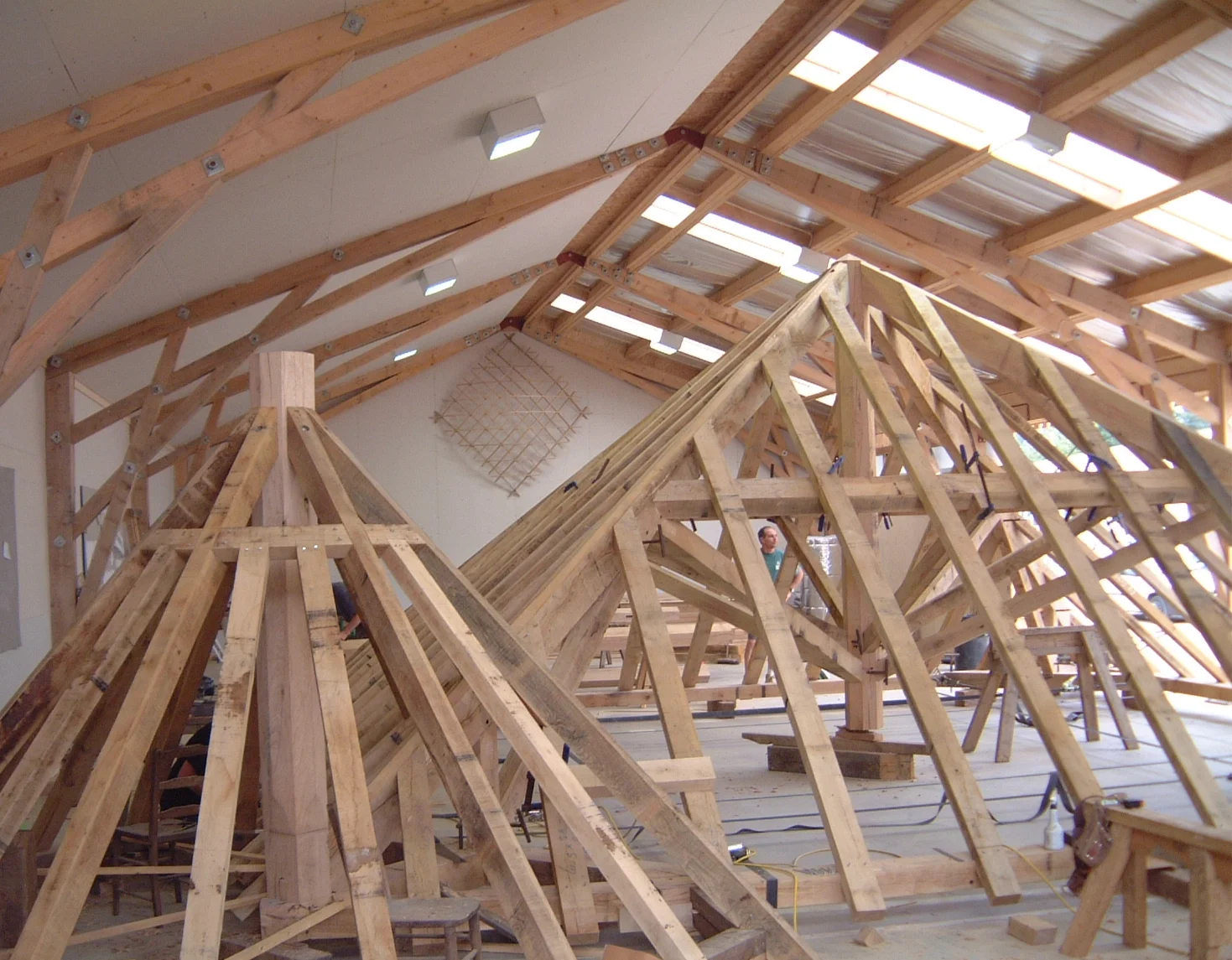
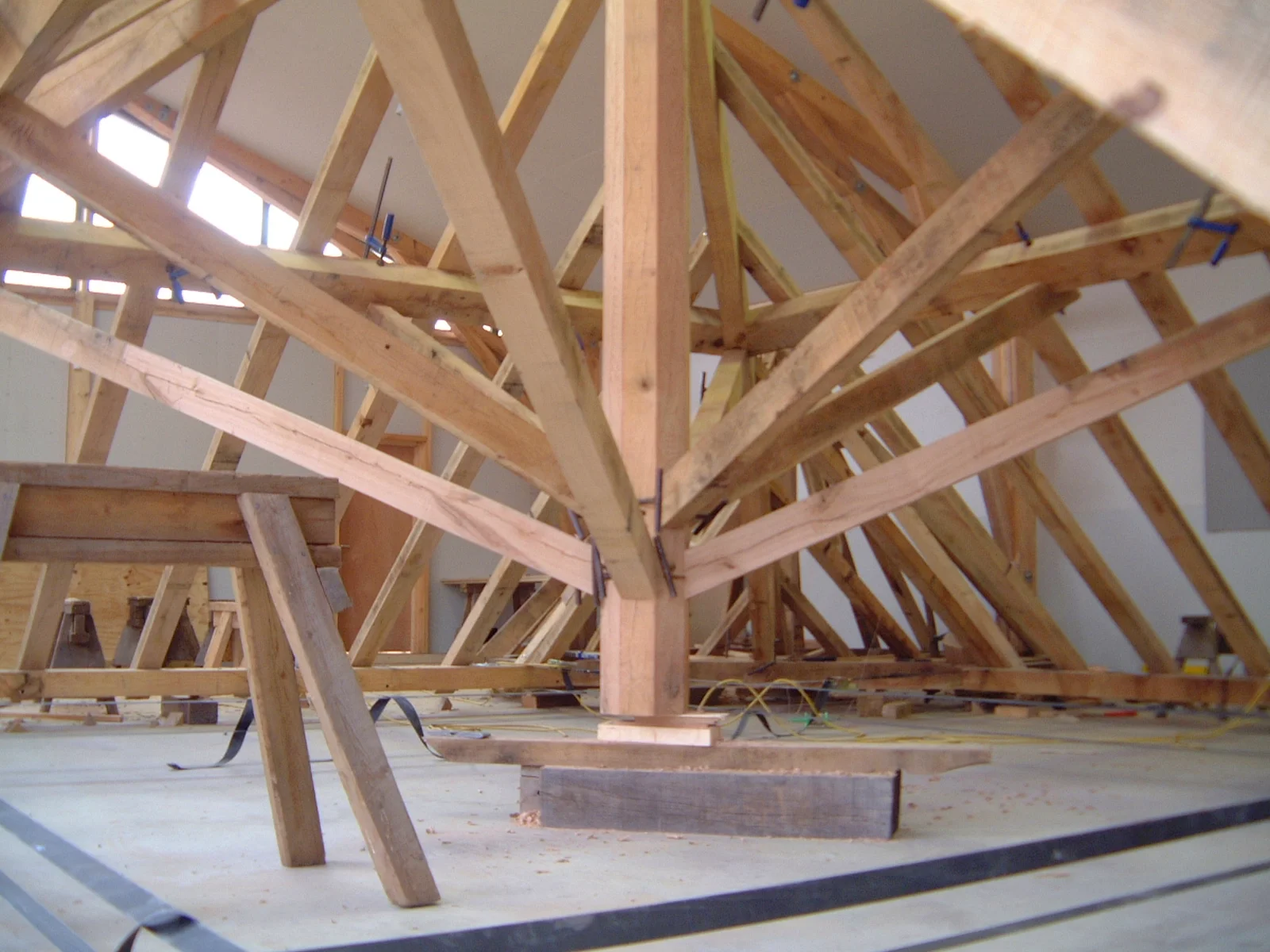
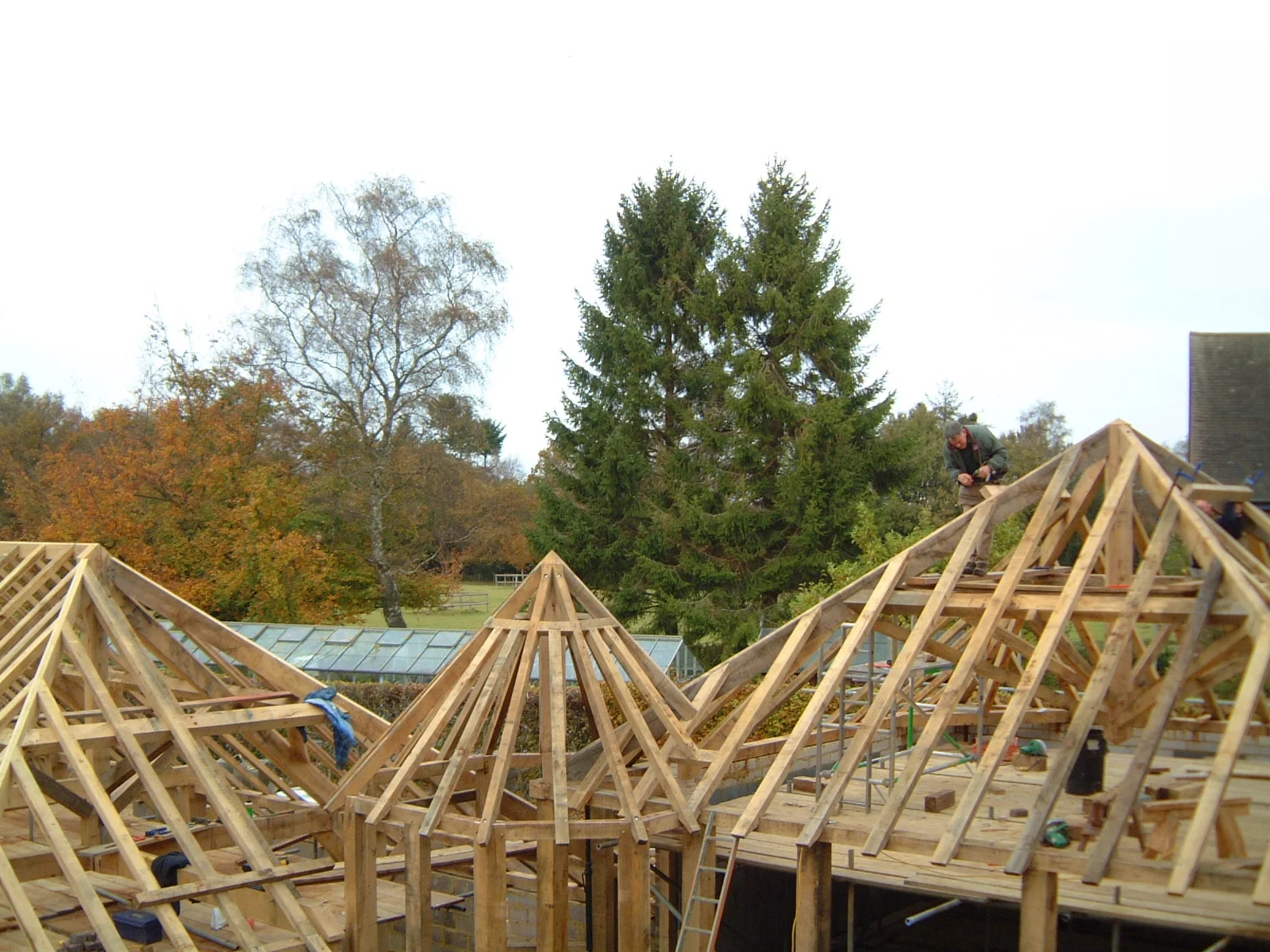
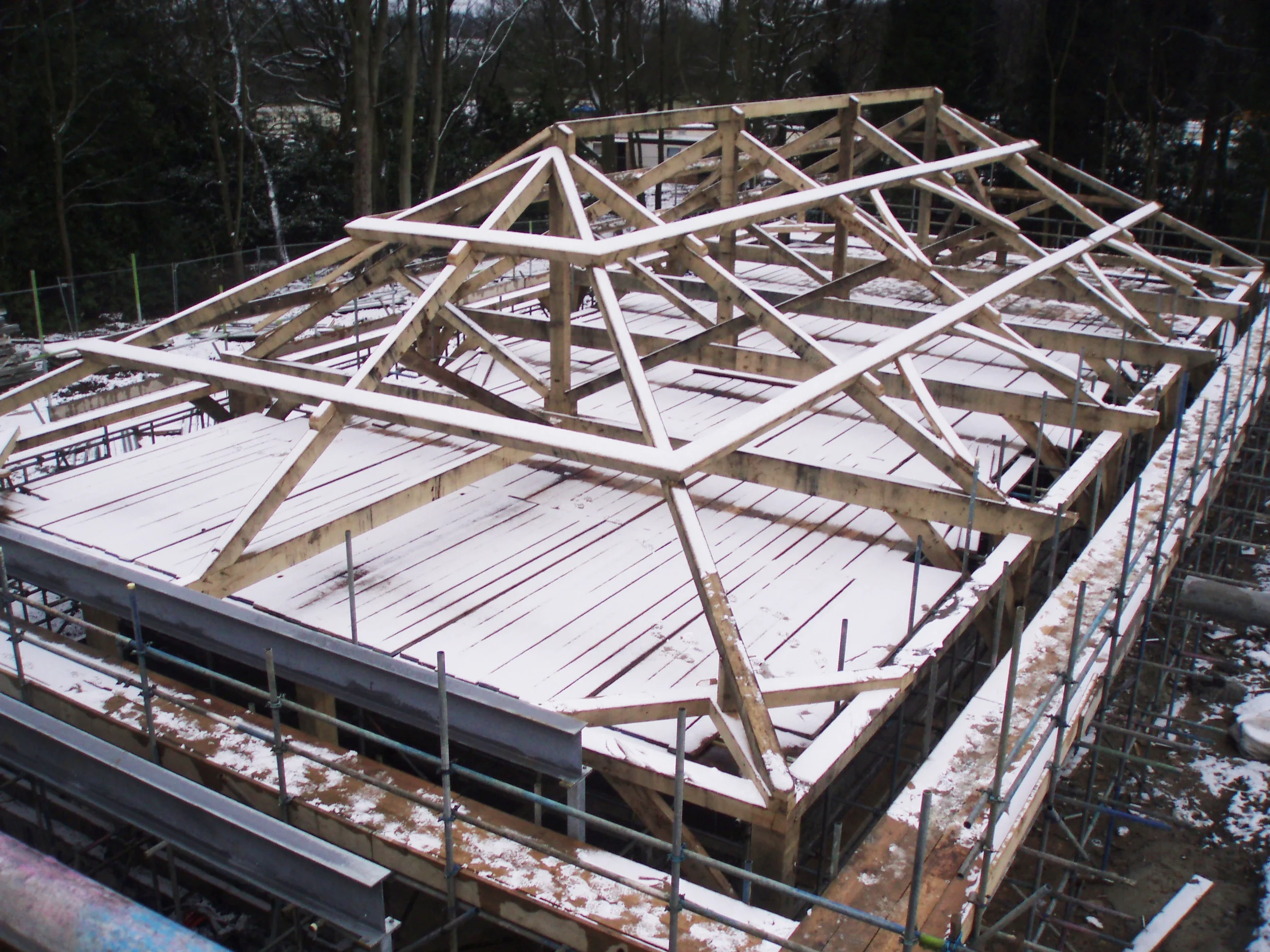
Apart from the pool barn itself, the work extended to fabricating a stair tower and a fitness studio adjoining the main pool area. These images, captured during the prefabrication phase in our workshop, show the conical roof of the stair tower, and its intersection with the fitness studio.
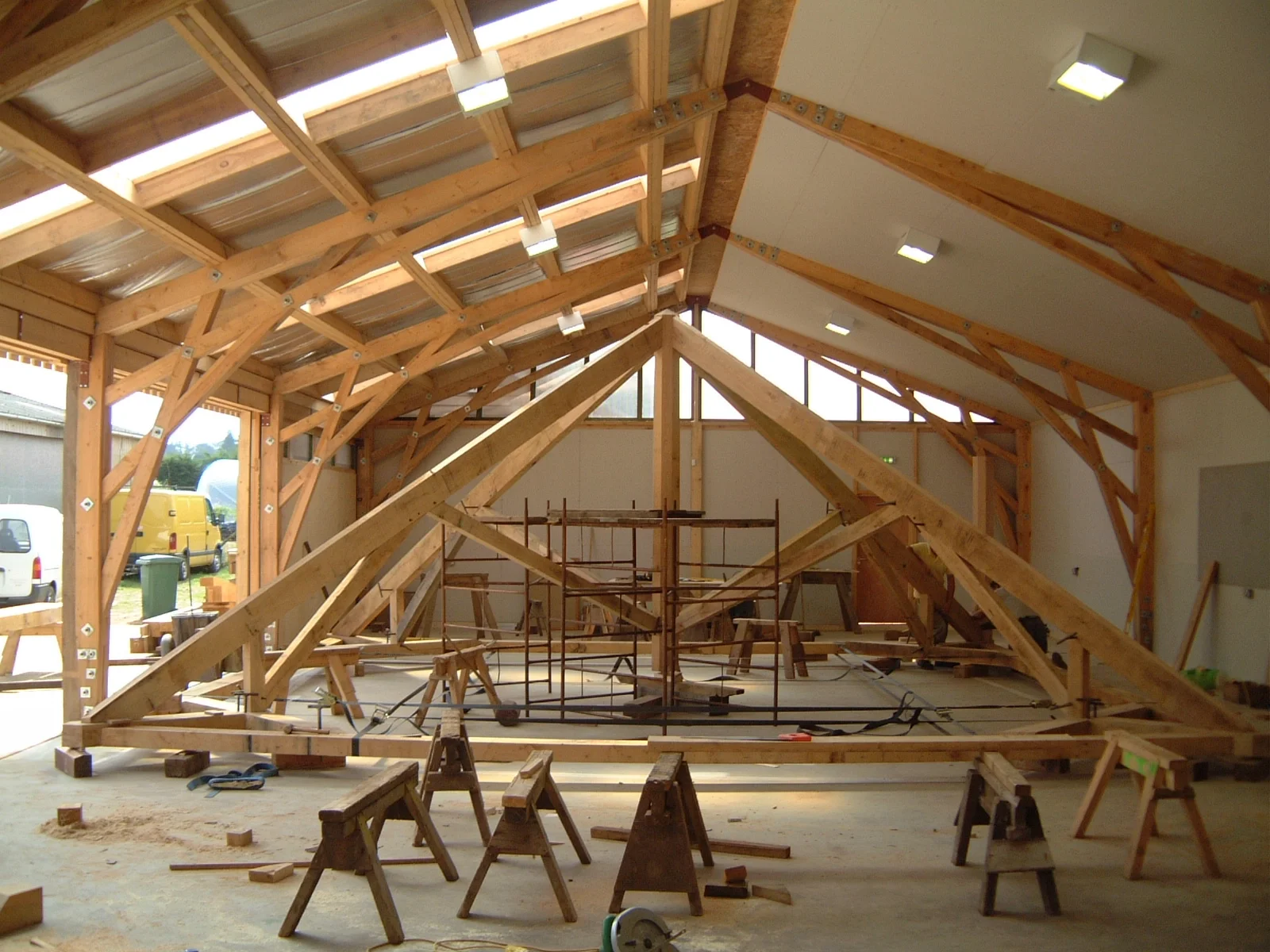
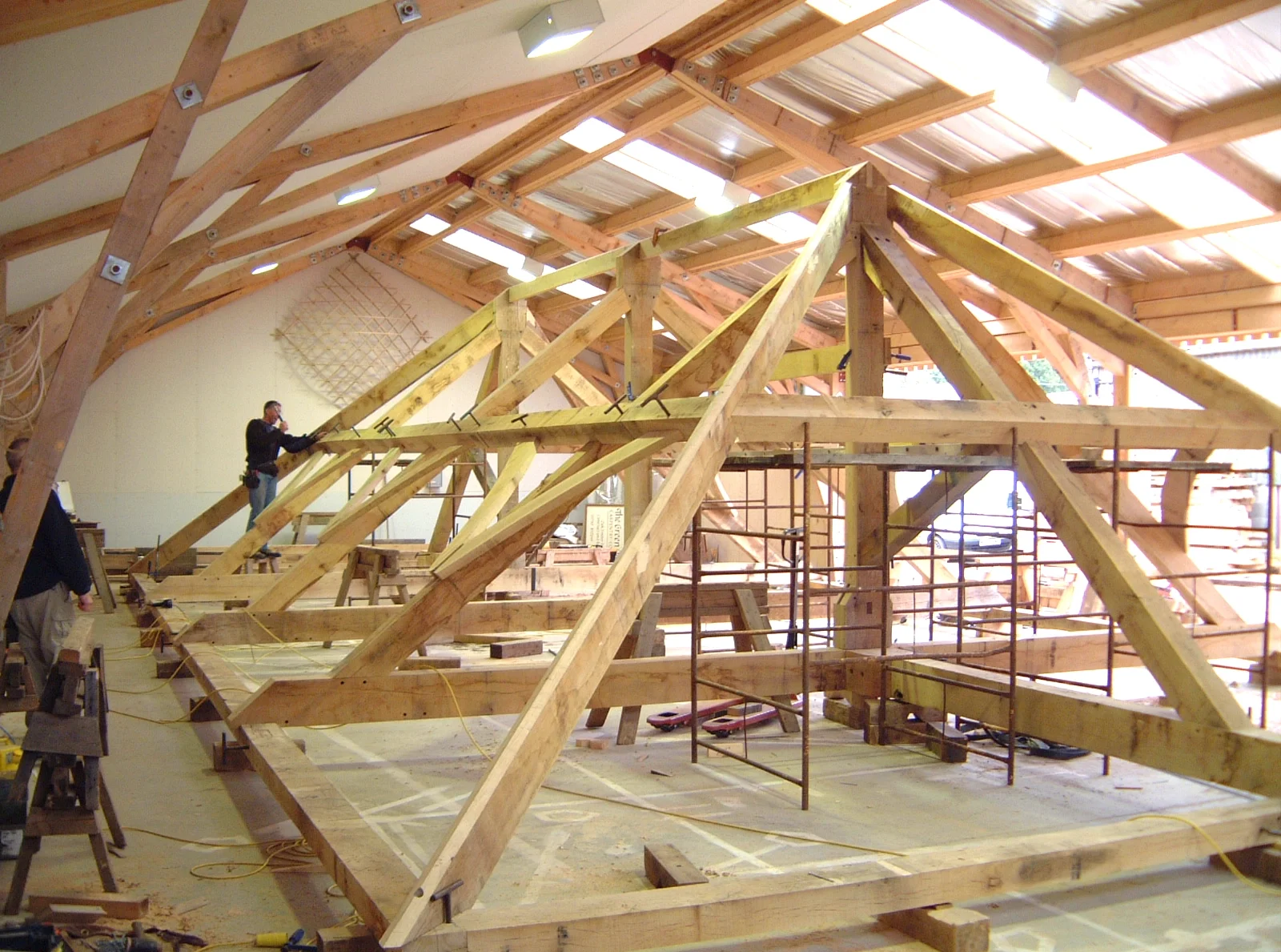
The roof frame of the pool barn is shown assembled in the workshop, ready to cut and pitch the oak rafters, a practice that ensures speed and accuracy during installation.
CLIENT
Private
ARCHITECT
Robert Trembath Architects
TIMBER STRUCTURE ENGINEER
IWP
TIMBER STRUCTURE SPECIALIST
The Green Oak Carpentry Company
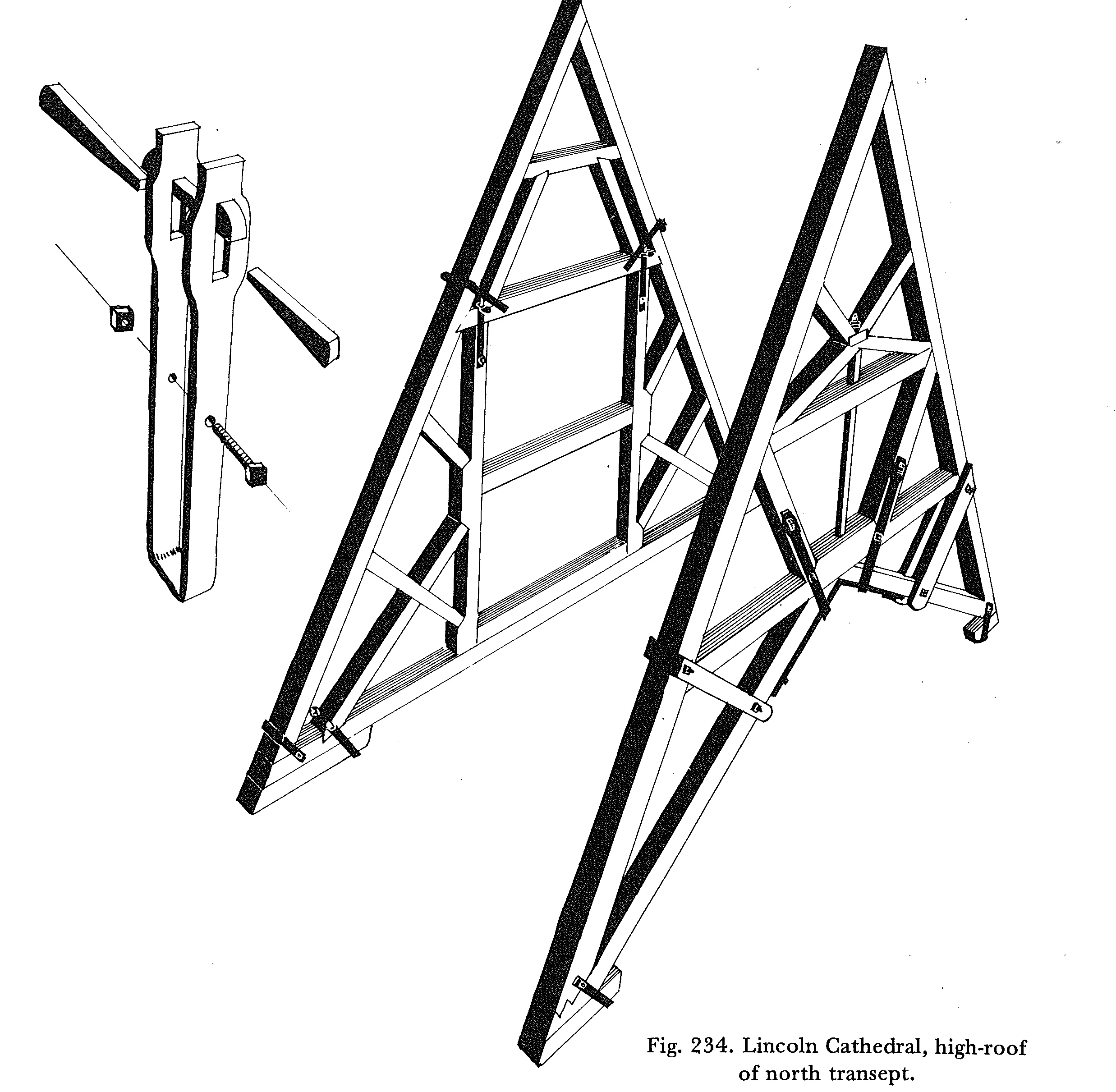
Gib and cotter tensioning system used in Lincoln Cathedral in the early 18th C. As relevant to achieving large span timber structures now as it was then