
Lees Farm
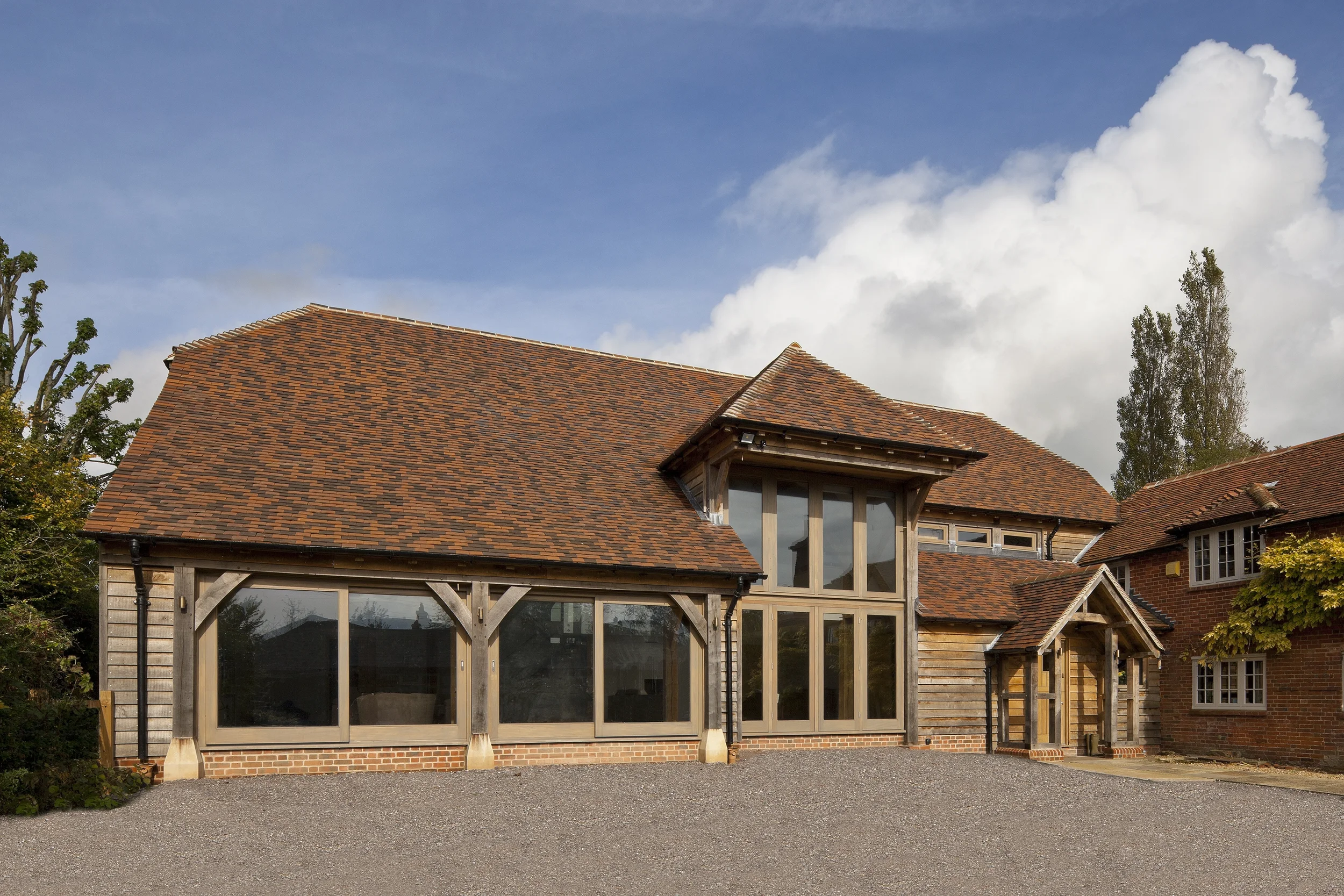
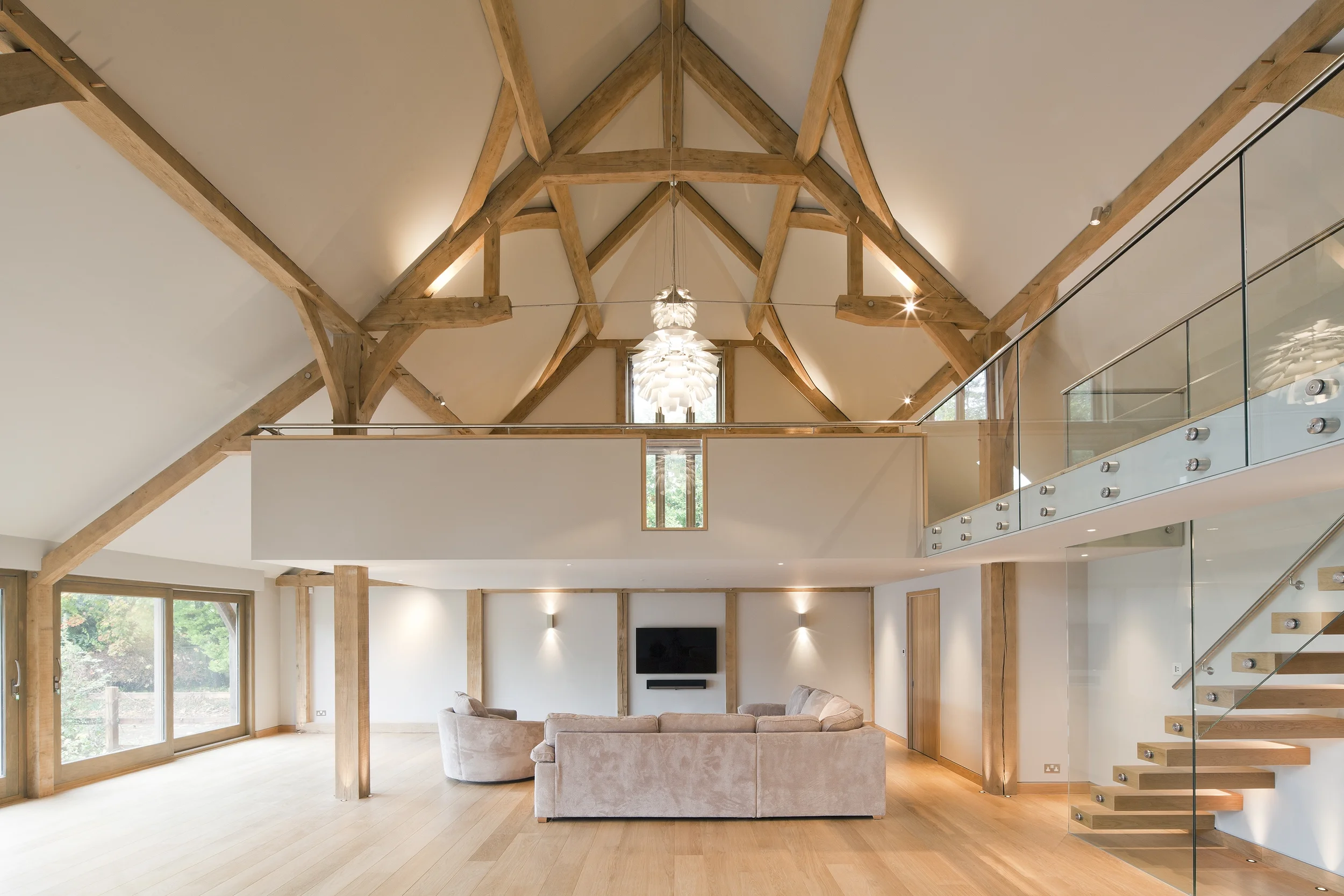
This new oak-framed structure spanning five bays, serves as the replacement for a barn destroyed by fire. Then as now, the central bay has a cantilevered porch roof, placed where the original cart entrance would have been.
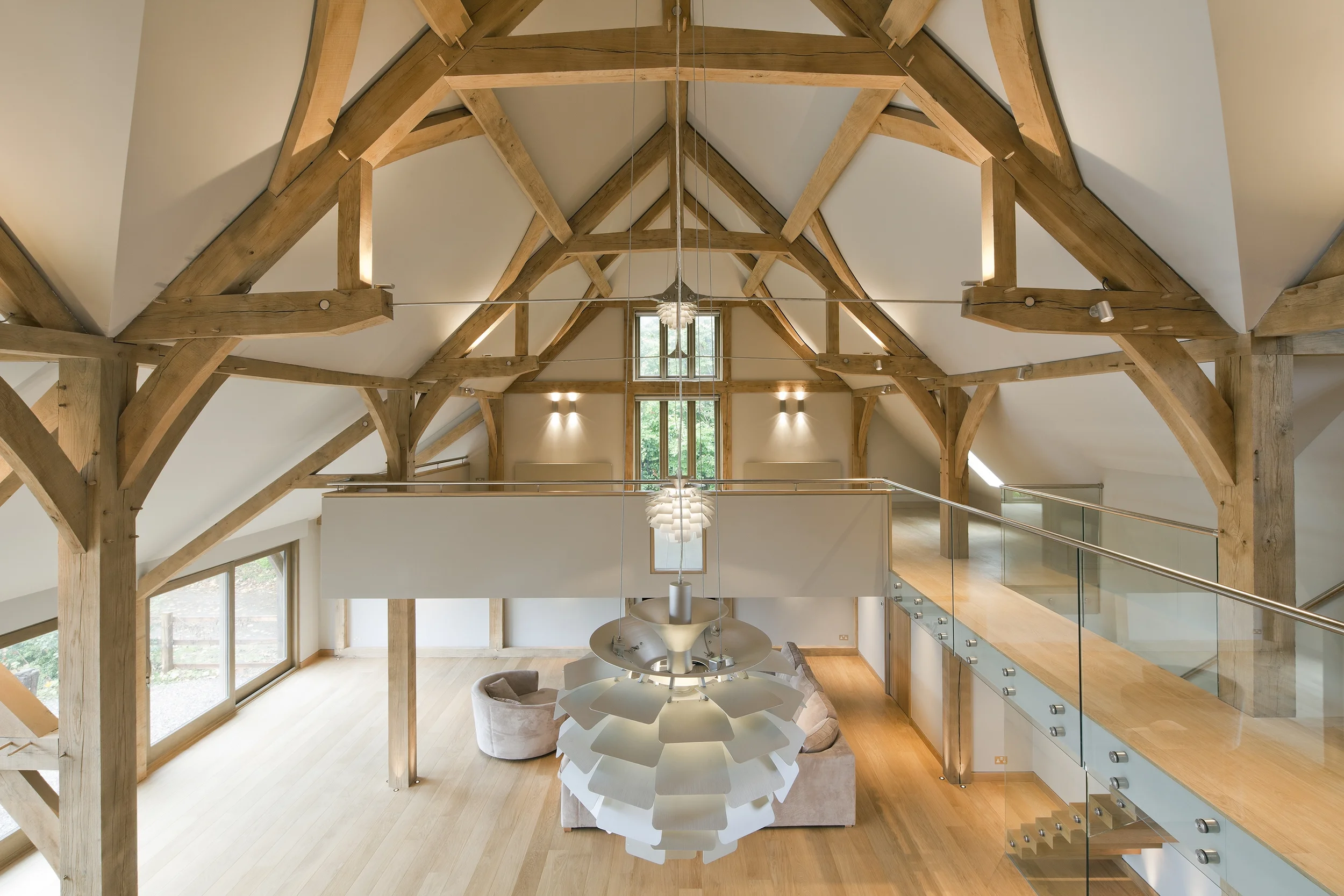
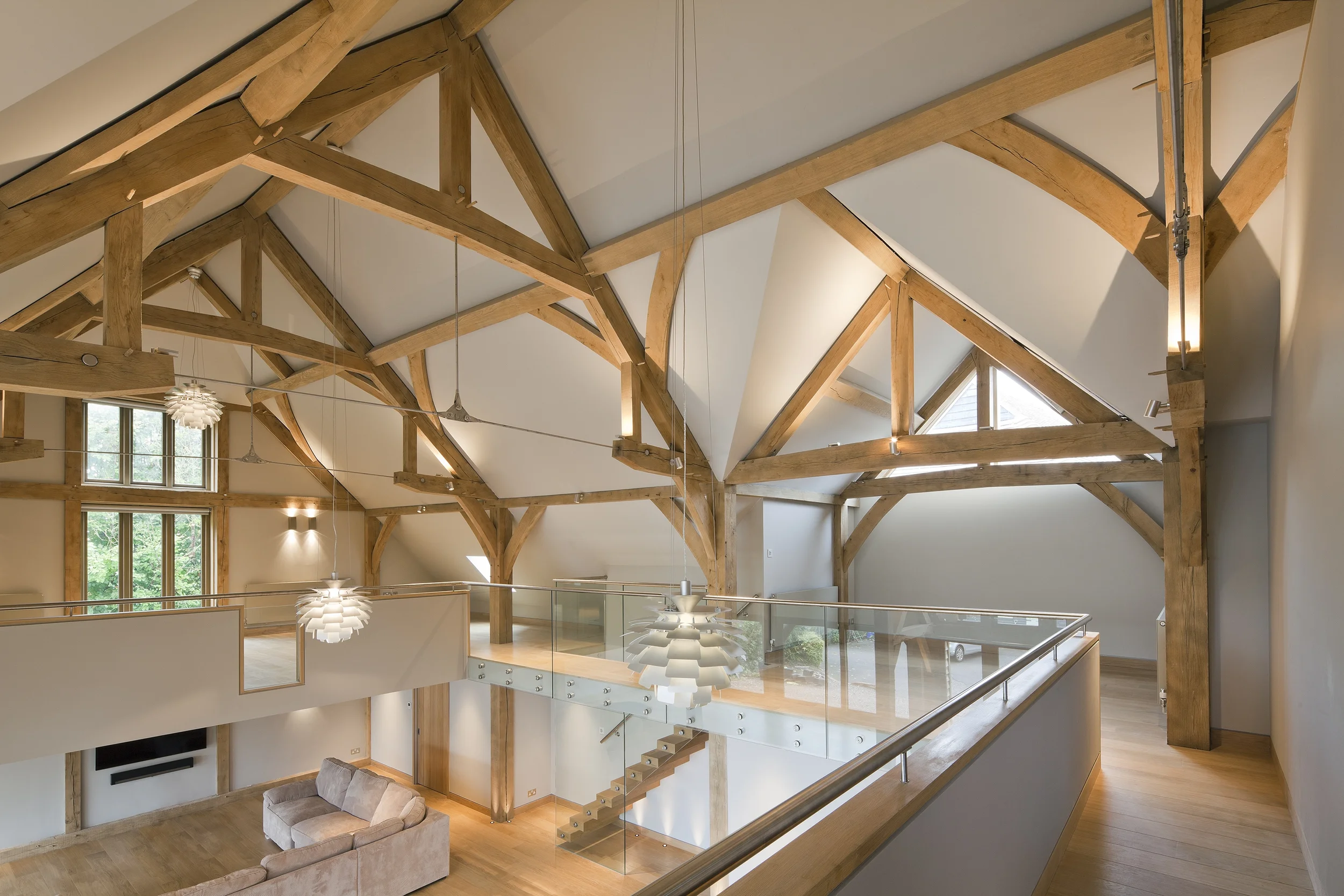
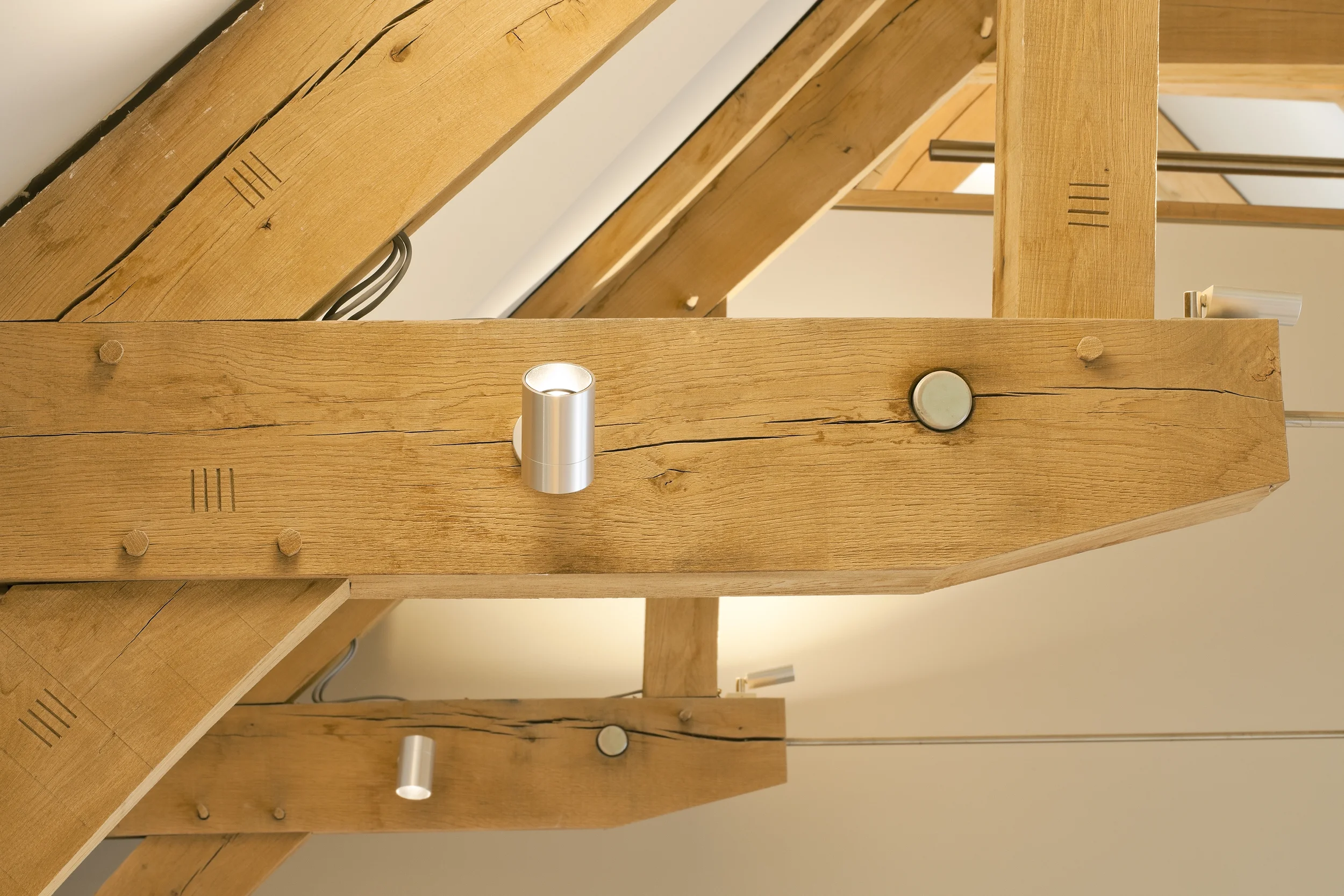
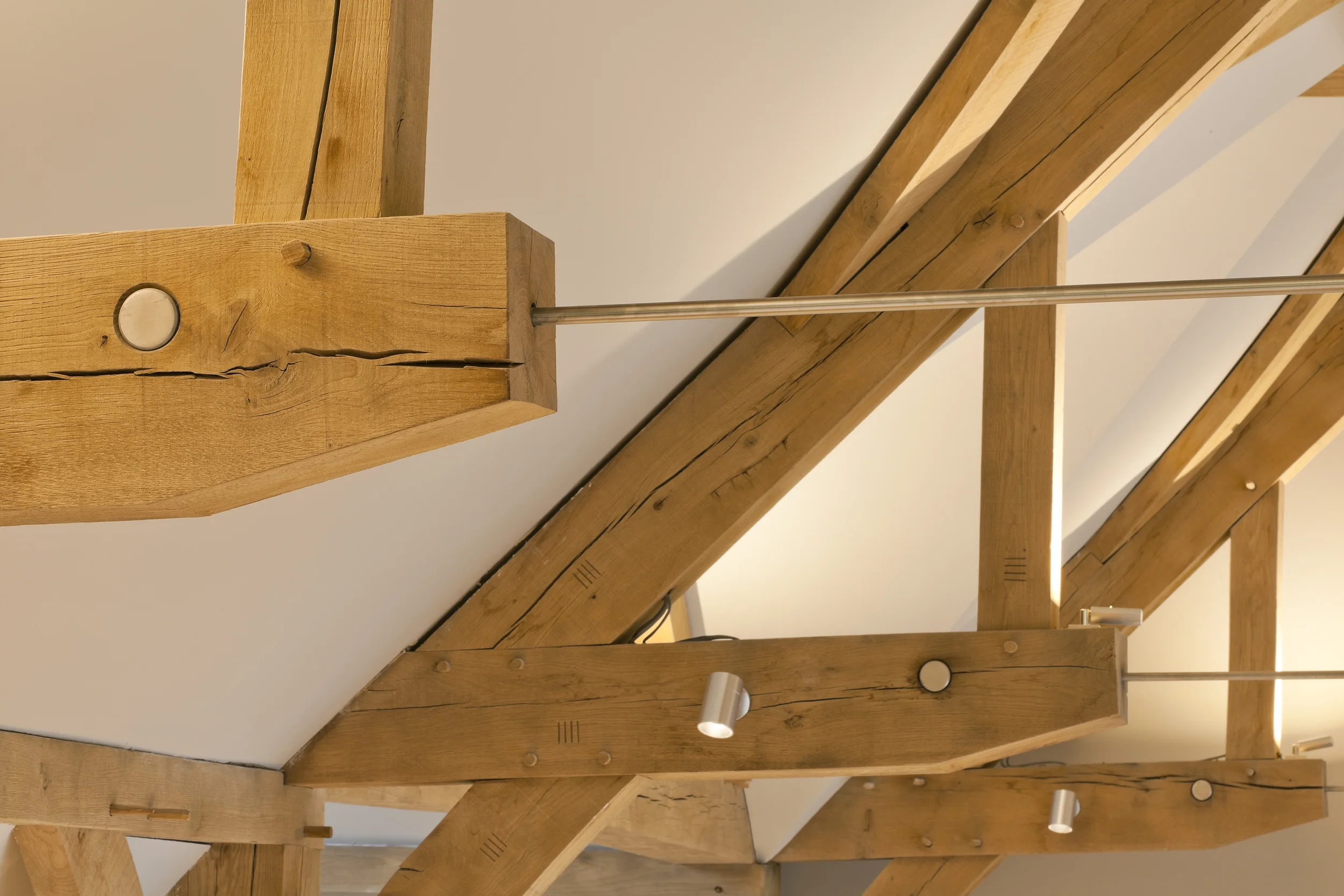
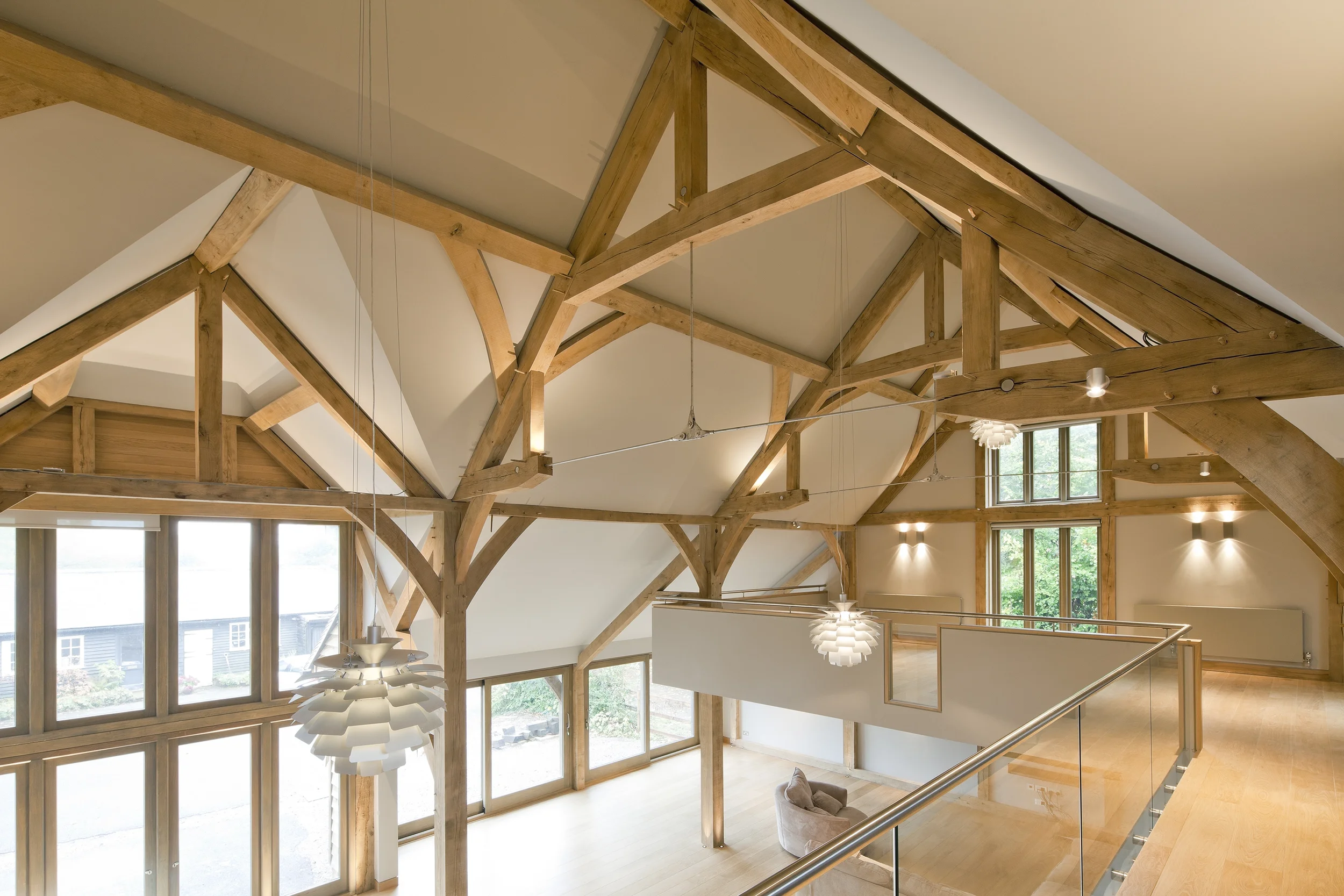
The trusses are a contemporary twist on the traditional hammer beam type, however as these trusses are prone to spreading under load, the decision was made to tie the hammer beams with stainless steel tendons with vertical ‘hangers’. The hammer beams are inclined at a 5-degree angle, giving them a positive camber, countering any deflection under load. Note the use of threaded ‘barrel bolts’ made of 50mm diameter stainless steel bar. These are let into the beam section with sufficient end grain to resist pulling out and are threaded to allow for fixing the tie rods.
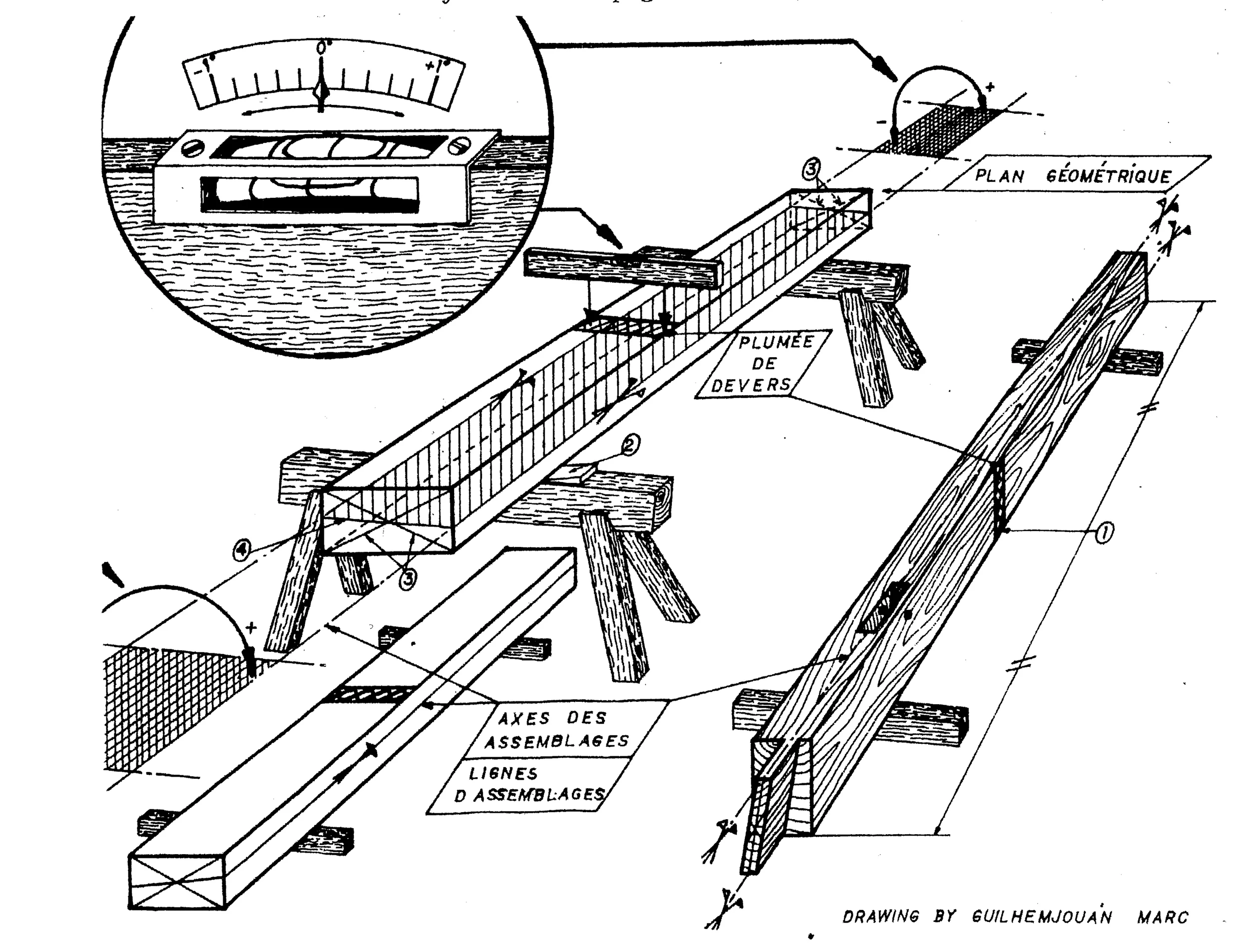
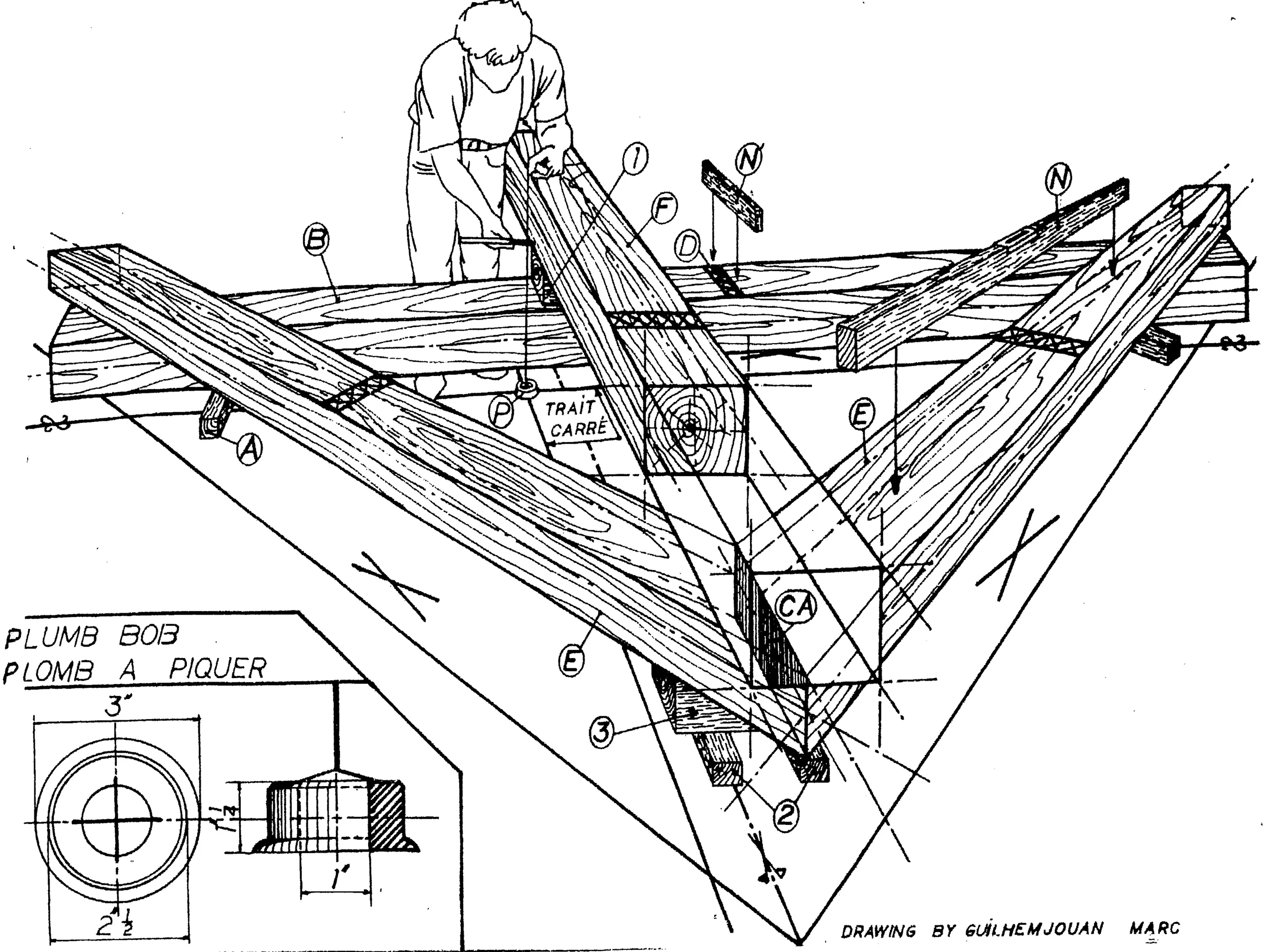
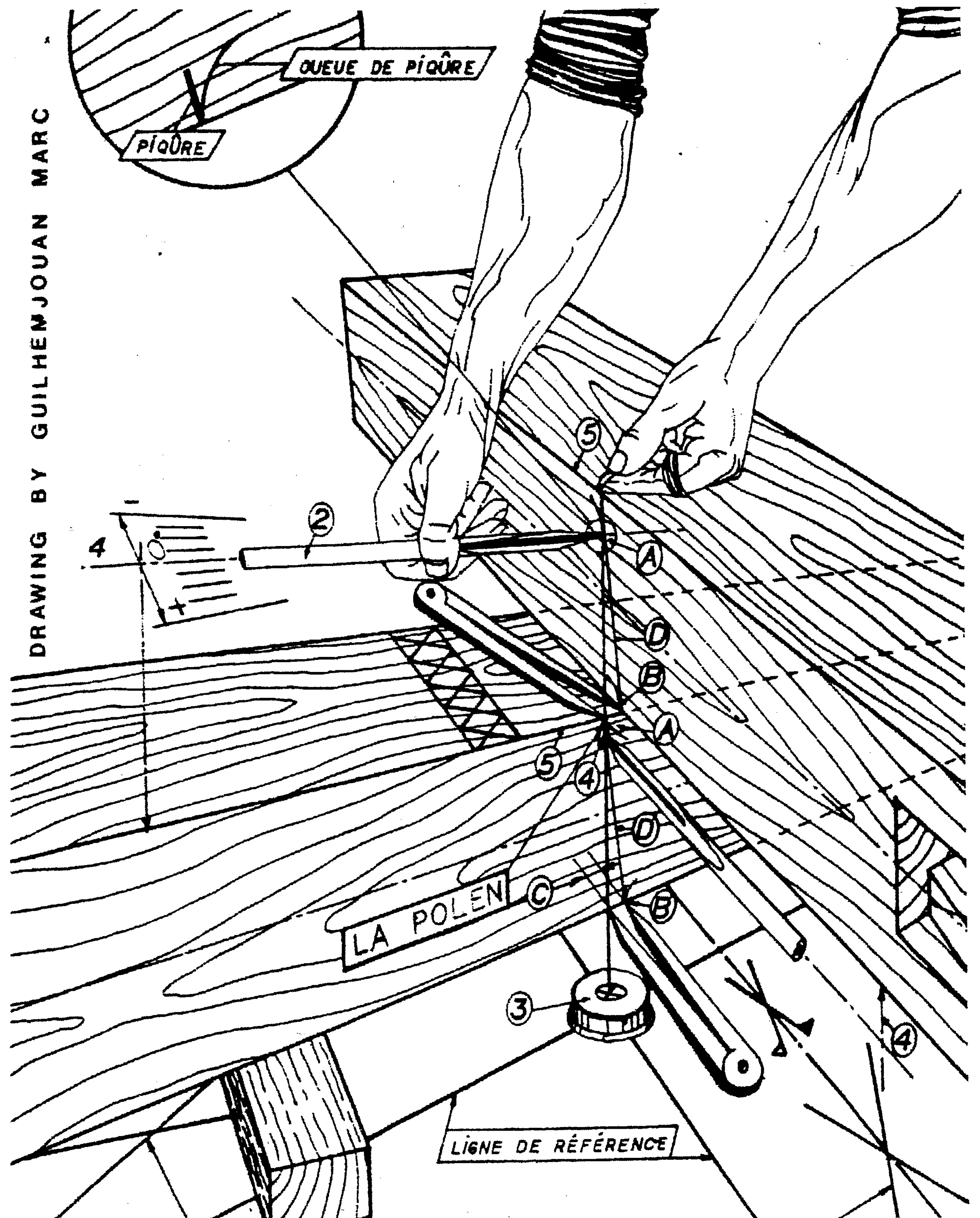
This frame is very typical of many produced by Green Oak over time. It utilises traditional scribing and lofting practices and as with all our frames, is built 2D, frame by frame on the lofting floor, until finally ready to be assembled. The process of lofting and scribing is meticulous, datums are established to ensure a precise fit of the joints when assembled three dimensionally for the first and only time. Cut ‘assembly marks’ indicate the unique location and orientation of each member, ensuring the final frame is assembled correctly. See illustrations of marking out.
There is much talk of ‘Modern Methods of Construction’ meaning building manufacture involving modular pre-fabricated components. It is worth noting that carpenters have, utilising historically accurate framing methods, been doing this for centuries.
CLIENT
Private
ARCHITECT
RPA Architects
TIMBER STRUCTURE ENGINEER
IWP
TIMBER STRUCTURE SPECIALIST
The Green Oak Carpentry Company
Using a plumb-bob is the most precise way to mark the shoulder of a mortise and tenon joint in oak frame carpentry, where the intersection is not a right angle